The Philippines’ Income Upgrade Hides a Grim Reality for Most Filipinos
MANILA — The World Bank’s decision to classify the Philippines as an upper-middle-income country was a long-awaited milestone for Manila, which missed the mark by a mere $26 last year. The upgrade, announced last week, was driven largely by a multisectoral expansion that lifted the country’s gross national income per capita to $4,850.
While the Marcos administration hailed the graduation as validation of the country’s macroeconomic resilience, a less rosy reality lies beneath it. Persistent inflation, slowing productivity, and a fragile labour market suggest that the country’s climb up the income ladder has yet to translate into broad-based gains.
The new status “isn’t the good news we think it is,” said Russell Stanley Geronimo, founder of Geronimo Law and a public policy expert. The World Bank’s framework, he noted, is a reminder that such changes are technical, not transformative. Income graduation is based on average national income, not on whether most households earn enough to live comfortably, build savings, or escape vulnerability. And while regional peers such as Vietnam scaled the same ladder on the back of a booming export-led industrial engine, the Philippines arrived at the threshold via a consumption-heavy path sustained by remittances from overseas workers.
Same Threshold, Different Paths
Vietnam and the Philippines are the only South-east Asian countries upgraded to upper-middle-income status this year, but they “reached the same thresholds through very different paths,” the World Bank said. As an industrial powerhouse, Vietnam saw its export sector surge by more than 15 percent in both 2024 and 2025, driving real GDP growth of 7 and 8 percent respectively and expanding its GNI at a staggering annual average of 10 percent over five years. The Philippines, by contrast, advanced through a broader but noticeably slower 5.8 percent average GDP growth rate over the same period, reflecting, in the World Bank’s words, gains across all major industries rather than a single-sector boom.
Crucially, the country’s GNI figures are padded by the earnings of overseas Filipino workers, which reached an all-time high of $35.6 billion last year and accelerated the graduation. But while remittance inflows provide a reliable consumer spending floor for roughly 360,000 households, they also mask weaknesses in domestic productivity. Manufacturing growth remains muted: the S&P Global Philippines Manufacturing Purchasing Managers’ Index inched up only from 50.8 to 50.9, a near-flatline reading suggesting the industrial base is idling under pressure from an appreciating real effective exchange rate, elevated energy costs, and rapid technological change.
Shifting away from these higher-productivity, export-oriented sectors “poses a structural constraint on income growth and, by extension, on the sustainability of consumption,” said Deepali Bhargava, regional head of research for Asia-Pacific at ING. The slowdown in productivity gains and in remittances, whose growth rate cooled to 2.8 percent, has left the Philippines lagging its Asia-Pacific peers in household consumption recovery, she explained.
‘Too Wealthy’ for Foreign Aid
In a country where nearly 18 million people, or 15.5 percent of the population, live below the poverty line, a financing and human capital crisis is now looming. The income upgrade has rendered the Philippines “too wealthy” to qualify for the concessional foreign aid and development loans that have long bankrolled its public works, yet it remains unequipped to fund its vast development agenda at commercial market rates, analysts say.
The immediate consequence is the premature loss of Official Development Assistance loans, the cheap, low-interest, long-maturity credit lines from multilaterals and foreign governments that have helped build the country’s infrastructure. “Whereas previously, the country enjoyed access to highly concessional ODA loans, now it will have limited access to cheap financial aid. At the same time, it is not yet wealthy enough to comfortably self-fund its massive development agenda at commercial rates,” Geronimo said. The classification will force the government to lean on public-private partnerships and international commercial credit, exposing future infrastructure projects to higher market-based interest rates and volatile global financing terms.
The state apparatus, he added, remains poorly designed for the transition, with decades of reliance on global donors having embedded institutional dependency within the bureaucracy. “Every line agency in the country has a dedicated foreign-assisted projects office, and almost every rural infrastructure or initiative is financed by multilaterals or foreign governments,” said Henry Custodio, a sustainable development specialist at the United Nations Industrial Development Organization. As the safety net of concessional lending disappears, he said, state agencies must rapidly learn to generate revenue independently, attract private capital, and deploy complex financing structures, capabilities they currently lack.
A Disconnect With the Microeconomy
The administration’s economic managers, for their part, view the upgrade as cause for celebration. Economic Development Secretary Arsenio Balisacan believes the new status will strengthen the country’s credit profile and ultimately widen its access to higher-quality commercial financing.
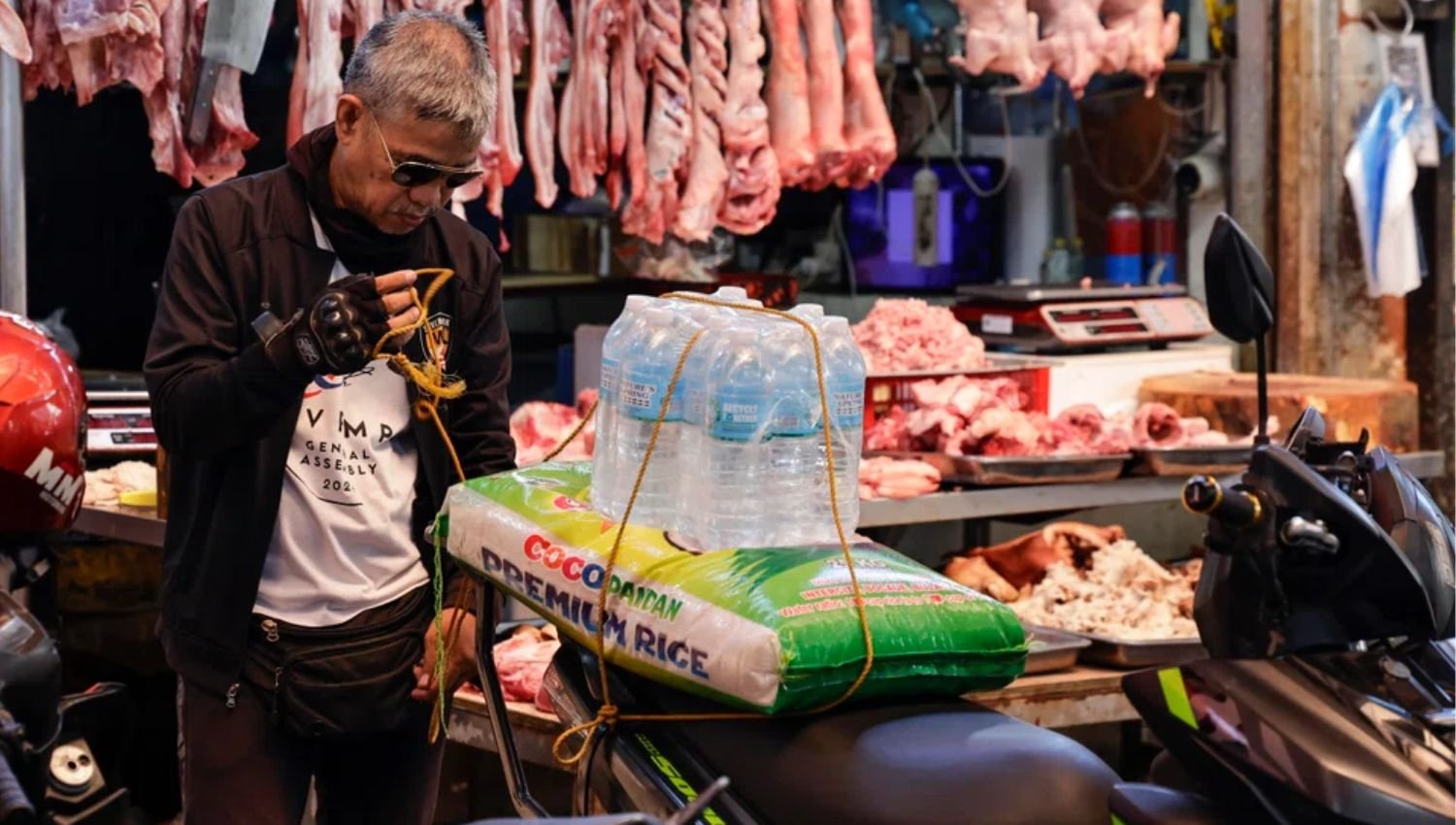
But lived realities remain deeply troubled. Domestic headline inflation reached a stubborn 6.4 percent in June, keeping household purchasing power under pressure, and to curb prices without crushing activity, the central bank anchored its benchmark interest rate at 4.75 percent. The quality of employment is also deteriorating: the number of unemployed Filipinos rose to 2.5 million, pushing the unemployment rate to 4.8 percent in May, up from 3.9 percent a year earlier. Underemployment, at 12.2 percent, leaves more than six million Filipinos trapped in low-hour, low-wage, or informal roles.
Geographic disparities continue to mask the country’s broader progress, with daily minimum wages ranging from a low of 411 pesos ($6.70) in the poorest regions of the Southern Philippines to a high of 780 pesos in Metro Manila, rates labour advocates warn are failing to keep pace with basic household needs.
Sonny Africa, executive director of the think tank Ibon Foundation, offered a sobering reminder. “The World Bank’s country classifications really aren’t meant to measure progress. From the beginning, they were designed as a simple standardised way to classify countries for the bank’s operational purposes, particularly for determining eligibility for concessional lending and its other development finance tools,” he said. “Can the arithmetical result still be used as a measure of progress? Maybe, if they didn’t conceal more than they revealed. In the Philippines’ case, they do.”