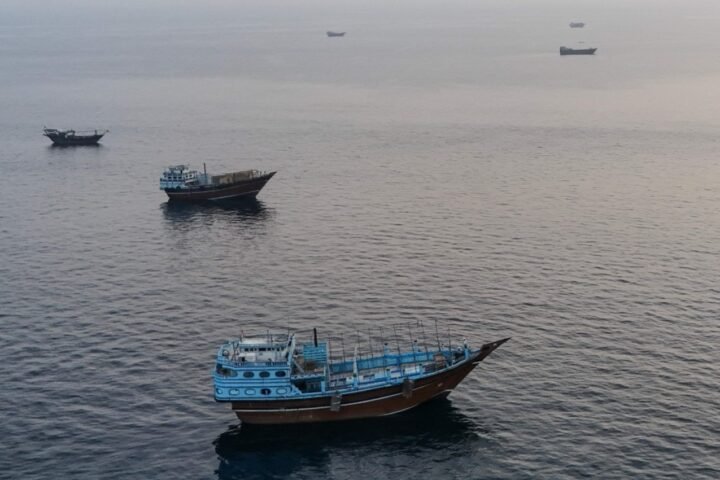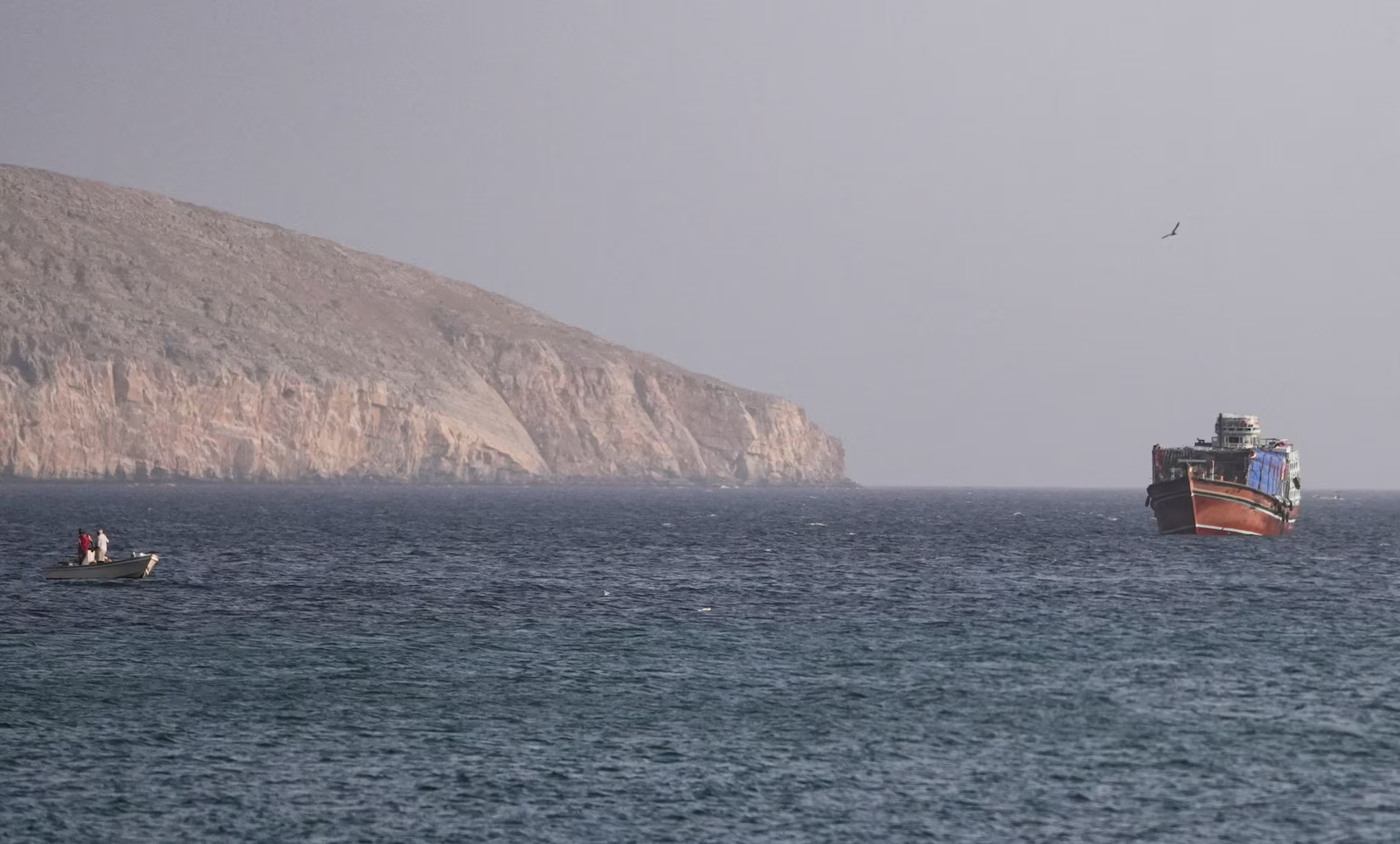
Four ships slipped out of the Strait of Hormuz in the last week of June. The MV Lyng Trader, MV Western Doncaster, MV Vivian Trader, and MV Eva Fuji were carrying the usual freight, but the cargo that mattered most to one government 7,000 kilometers away was the crew list: 81 Filipino seafarers, all of whom are now confirmed safe, according to the Philippines’ Department of Foreign Affairs.
Markets have spent the crisis watching the oil. The strait between Iran and Oman carried 20.9 million barrels of petroleum liquids a day in the first half of 2025, about 20 percent of global consumption and a quarter of all seaborne traded oil, according to the U.S. Energy Information Administration. When American strikes on Iran drew retaliation against facilities in Gulf states allied with Washington, the disruption showed up exactly where energy analysts expected. EIA data reported by the Institute for Energy Research shows flows through Hormuz fell almost 30 percent year over year in the first quarter of 2026, to 14.6 million barrels a day.
Here is what the barrel-counting misses. Every one of those tankers, bulkers, and container ships is run by a crew, and no country supplies more of them than the Philippines. The Seafarer Workforce Report 2026, cited by the country’s Maritime Industry Authority, ranks the Philippines first in the world with 203,179 officers, ahead of India, China, Russia, and Indonesia. A chokepoint for oil is, by definition, a chokepoint for the people who move it. The Hormuz crisis turned that abstraction into an operational problem: how do you extract a distributed workforce from a conflict zone when the workplace is the conflict zone?
The evacuation was a logistics operation nobody branded
The answer, it turns out, was a quiet piece of multilateral machinery. The United Nations facilitated the safe passage of 136 vessels and approximately 2,900 seafarers out of the conflict area, per the DFA. No airlift footage, no dramatic port scenes. The corridor worked the way good infrastructure works, invisibly, ship by ship, during a temporary ceasefire between Iran and the United States.
The four Philippine-registered vessels made their transit inside that window. The DFA’s statement afterward was the sound of a system functioning:
“All 81 Filipino seafarers aboard the four vessels are safe. Most have resumed their regular seafaring duties, while others have taken the opportunity to return home to their families.”
Read that sentence again, because the second half is the remarkable part. Most of the crews went straight back to work. The global shipping industry’s labor model depends on exactly that behavior: people who treat a transit through a militarized strait as a Tuesday, then pick up the next rotation. Around 90 percent of world trade moves by sea, and the tolerance of the people crewing it is a load-bearing input that never appears on a freight invoice.
For the Philippines, that tolerance is macroeconomic. Cash remittances from overseas Filipino workers reached $34.49 billion in 2024, according to central bank figures reported by BusinessWorld, and seafarers are a core component of that flow. When Manila’s foreign ministry tracks four merchant ships through a strait, it is doing consular protection and balance-of-payments defense at the same time.
The system worked once. Then it stopped
Now the part that should worry anyone who reads the safe-transit headline as a happy ending. Evacuation operations were suspended after the temporary ceasefire between Iran and the United States ended, and some Filipino seafarers remain stranded in the region. The DFA says it will continue to monitor their situation and work toward their eventual safe passage.
That is the honest status of the machinery: it functioned for 136 vessels and then the window closed. A UN-facilitated corridor is not infrastructure in any durable sense. It is a negotiated pause, and it lasts exactly as long as the parties want it to. The 81 seafarers who made it out and the unknown number who did not were separated by timing, not by any difference in the system protecting them. Whether the corridor reopens is a question the DFA cannot answer, because it depends on decisions made in Tehran and Washington, not Manila.
There is a concentration-risk reading of this story that cuts in both directions. Shipping companies discovered decades ago that recruiting heavily from one archipelago produced consistent, English-proficient, technically trained crews. The efficiency was real. So is the exposure it created: a single labor market whose government must now run diplomatic operations wherever in the world shipping gets dangerous, and a global fleet whose crewing pipeline runs through one country’s risk decisions. The Philippines has already shown it will restrict deployments to protect its people. Every shipowner routing through contested water should be modeling what happens if the world’s largest seafaring nation decides a route is no longer worth its workers.
The strait will reopen fully at some point, the barrels will flow, and the energy dashboards will go back to green. The crews are the variable that doesn’t reset. Ships can be rerouted, insured, and replaced. The 2,900 people the UN moved out of the Gulf, and the ones still waiting, are the reminder of what the whole system actually runs on.
Oil is what moves through the Strait of Hormuz. People are what move the oil.