Immigration law does not offer many second chances. A missed deadline on a petition is not usually a recoverable error; it can reset a timeline by years or permanently foreclose a relief option that was available before the mistake. A poorly prepared response to a Request for Evidence can turn an approvable application into a denial. A removal hearing in which the client was not properly prepared cannot be reheard because the attorney was underprepared the first time.
This is different from most professional service failures. A bad accountant costs money that can often be recovered. A bad contractor leaves work that can be redone. However, a bad immigration attorney can lead to consequences that last for a decade.
The errors that create the most damage
Not all immigration legal errors are equal in their consequences. Some are administrative and correctable—a misfiled document, a missed signature, an incorrect form version. These are frustrating and potentially costly in time and fees, but they are generally fixable.
Others are structural. An attorney who does not recognize that a client qualifies for a particular form of relief may never raise the argument. An attorney who fails to preserve an appeal in the correct procedural window may inadvertently waive rights that cannot be reinstated. An attorney who prepares a client inadequately for a removal hearing may allow damaging testimony to enter the record unchallenged. This testimony now follows the case through every subsequent proceeding.
What makes these errors particularly damaging is that they are often invisible at the time they occur. The client is not told that an argument was missed. The record does not show what was not raised. The case simply proceeds along a track worse than the one it should have been on, and the gap between the two only becomes apparent when things go wrong further down the road.
What incoming cases with prior errors look like
According to personal injury and immigration lawyer Michael Piri of The Piri Law Firm, the patterns in those damaged cases are consistent. Oftentimes, prior counsel took on too many clients and gave each one too little attention; others lacked litigation experience and was not equipped to handle the case once it became contested; while for some, their counsel did not understand their full situation, including, in many instances, the intersection of the client’s immigration matter with a civil legal history, and built a case based on an incomplete picture.
In his years of experience handling clients with immigration concerns, Piri shares that recoveries in these situations vary. Some errors can be addressed through appeals or motions to reopen. Others permanently close off previously available options. However, in the worst-case scenario, some of the damage caused by inadequate representation cannot be undone; it can only be worked around.
What good representation looks like as a protective measure
Outcomes do not define good immigration representation. It is defined by the decisions made before the first filing, the arguments identified before the first hearing, and the risks flagged before they become problems. For clients who have already experienced the consequences of inadequate counsel, that distinction tends to be obvious in retrospect. For clients selecting an attorney for the first time, it requires knowing what to look for.
The first marker is preparation depth. An attorney who reviews a client’s full history, from the immigration record, civil legal background, employment situation, and family circumstances, before advising on a course of action, is doing something categorically different from one who processes the presenting application and moves on.
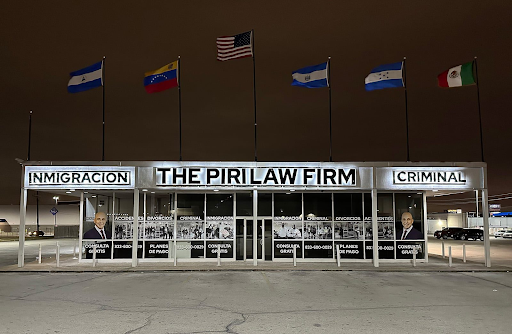
The Piri Law Firm operates across both immigration and personal injury law, which means its attorneys, led by Michael Piri, are trained to read a client’s situation across both legal tracks simultaneously. A prior civil matter, an unresolved injury claim, a gap in documentation—any of these can affect the trajectory of an immigration proceeding if they are not identified early. Most immigration-only firms are not looking for those connections because they are not equipped to act on them.
The second marker is litigation readiness. Many immigration cases that begin as administrative matters become contested at some point, a denial is issued, a removal order is placed, or a hearing is scheduled. An attorney who has never argued a contested case in immigration court is not equipped to handle that shift. Clients are often unaware of this gap until the moment it becomes relevant, which is the worst possible time to discover it.
At The Piri Law Firm, the intake process is built around these two markers. Piri understands the weight of proper legal guidance, especially in immigration and personal injury cases, so he has been direct about the nature of his practice: “We can handle cases that other firms have failed at or refuse to take on, but we study each of our cases, and only sign clients we can actually help.”
That selectivity is what makes the representation meaningful rather than procedural. For the team at The Piri Law Firm, honesty is crucial in these high stakes. For Piri, taking a damaged case and telling a client it can be fully repaired when it cannot is not helping them. Telling them what is still possible and building the strongest available strategy from that point is.
Getting it right on the first step
The practical implication for anyone selecting immigration counsel is that the cost of poor representation is not limited to the attorney’s fees. It includes the time spent rebuilding a case that was mishandled, the options that are no longer available, and, in the worst outcomes, the consequences of a proceeding that went the wrong way because the representation behind it was inadequate.
Evaluating an immigration attorney before engaging them is, for most people, unfamiliar territory. The questions worth asking are not complicated: Has this attorney handled contested cases similar to mine? Has this firm appeared in immigration court recently? Does this attorney understand my full situation, including any aspects that connect to civil law, or only the immigration track in isolation?
According to Piri, the answers to these questions lie in the difference between the representation built for what the case actually requires and the representation that was available and affordable at the time. For a decision where the consequences of getting it wrong can follow a person for the rest of their life, that distinction is not one to minimize.