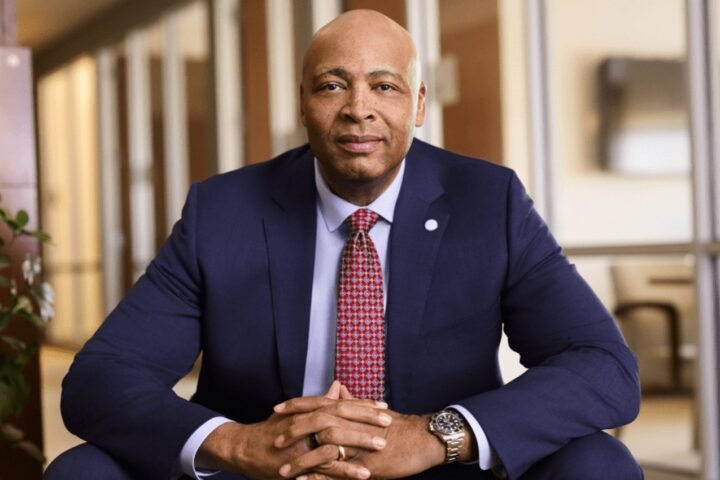
Founded in 2021, The Piri Law Firm describes itself as serving the Latino community in Dallas-Fort Worth, a positioning that goes beyond marketing language into how founder Michael Piri actually runs client meetings. Piri is fluent in Spanish and French, and he uses both directly with clients rather than routing conversations through an interpreter.
Language as Access, Not a Feature
For many Hispanic and Latino families in North Texas, the first obstacle to seeking legal help is not the underlying law. It is the sense that legal institutions are distant, formal, and built for someone else. A firm that communicates in a client’s first language removes one layer of that distance immediately, before any legal strategy is even discussed.
That is the premise behind Piri’s approach to language at the firm: Spanish-language communication is available at every stage of a case, from the initial consultation through the final resolution, not reserved for an intake form or a single bilingual staff member.
What Understanding Looks Like Beyond Vocabulary
Piri has described the firm’s message as rooted in the idea that clients should feel welcomed and understood, and that their rights deserve to be fought for regardless of their immigration status. That extends past word choice into familiarity with the specific pressures Latino and immigrant families carry into a legal matter: mixed-status households, work schedules built around informal or inflexible jobs, and the particular anxiety that comes with any interaction that might touch on immigration status, even when the underlying matter is a car accident or a workplace injury.
Why Trust Compounds Over a Long Case
“Lawyers like to think clients stay because of our legal theories,” Piri has said. “A lot of the time, they stay because someone answered the phone on a bad day.”
That standard is harder to meet across a language barrier, not easier, which is part of why Piri treats bilingual communication as infrastructure rather than a courtesy. A client who has to wait for a translator to become available, or who receives case updates only in English, experiences a version of representation that is functionally slower and less transparent than one delivered in their own language, even when the legal work behind it is identical.
A Practice Built Around a Specific Community’s Reality
None of this replaces the underlying legal work. Immigration filings still have to be accurate. Personal injury claims still have to be built on solid liability and damages arguments. But for a firm whose stated mission is serving Latino and immigrant families across Dallas-Fort Worth, language has functioned as the mechanism that makes the rest of that work reachable in the first place. Piri’s own path, an American University of Paris education that left him fluent in French in addition to Spanish, is not the reason the firm serves this community. It is, at most, a detail that made him personally suited to build a practice around a need he identified independent of his own background: that legal representation in a client’s first language is not a courtesy in immigration and injury law. For many families, it is the difference between a case they understand and one they simply endure