In the public career of Vijayent Kohli, the modern cybersecurity story reads less like a race to build higher walls than a campaign to question every gate, every credential, and every claim of legitimacy. Kohli is listed as a principal cybersecurity engineer at Ford Motor Company. This role places him inside one of the industrial systems now being remade by software, connectivity, and constant exposure to digital risk.
His professional path suggests why zero trust is a fitting framework for his work. Public biographical profiles connect him not only to Ford but also to earlier work in large-scale software and payments environments, where the challenge was not merely to stop fraud or block intrusions, but to design systems that could keep making decisions under pressure. What emerges from that record is the outline of an engineer concerned with trust as a moving variable rather than a settled fact.
Security Without Perimeters
That idea matters because the old geography of corporate security has started to collapse. The perimeter once seemed clear enough: employees inside, attackers outside, and a network edge that could be defended with sufficient vigilance. In Kohli’s field, that distinction has weakened as companies depend on cloud services, mobile devices, third-party software, and machine-to-machine communication that ignore the old borderlines.
Zero trust, in that setting, is less a slogan than a discipline of suspicion. It assumes that users, devices, and applications must prove themselves repeatedly, not simply once, and that access should be narrow, temporary, and continuously reviewed. Kohli’s current work at Ford makes that logic especially consequential because connected vehicles, remote diagnostics, and software-defined features extend the enterprise far beyond the office network.
The useful insight here is economic as much as technical. A connected car is not just a product; it is a node in a wider system of suppliers, cloud services, mobile interfaces, and update channels. In such a world, trust granted too broadly becomes not a convenience but a liability, and architecture becomes a way of deciding which risks a company is willing to normalize. That is the ground on which security engineers like Kohli now operate.
From Payments to Vehicles
His earlier work helps explain the continuity. Public summaries of his experience describe roles involving fraud prevention and real-time risk detection in payment systems, environments where bad decisions are measured not in abstract vulnerabilities but in immediate financial losses. Systems like these train engineers to think in terms of probabilities, edge cases, and adversarial behavior, which is another way of saying they train them to distrust appearances.
That mindset naturally carries over to automotive cybersecurity. Vehicles now contain dense layers of software, sensors, and communication systems, and each new convenience introduces another path that must be authenticated, monitored, and constrained. Kohli’s profile and public speaking appearances suggest a professional interest in exactly this intersection of identity, automation, and resilient design.
The continuity is notable because it bridges two industries that once seemed distant. Payments taught modern security teams that fraud prevention could not rely solely on static rules. Automotive now faces a related lesson: safety and trust in a connected machine cannot rest on assumptions inherited from an earlier mechanical era. The engineer who has worked through both worlds is well placed to see the pattern before others name it.
Public Language for a Technical Age
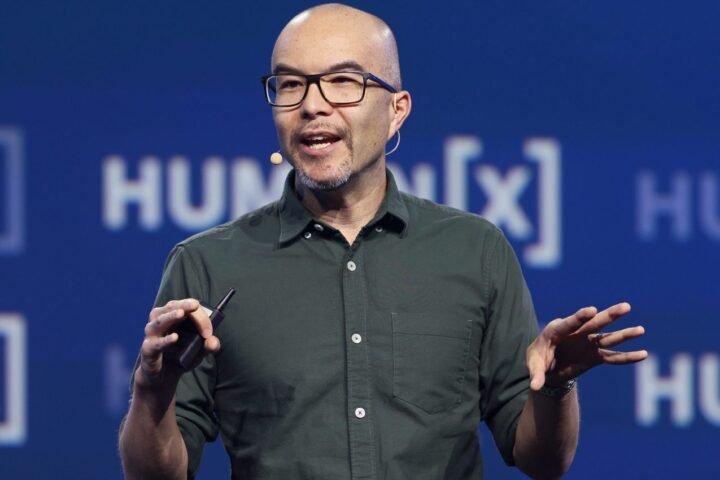
Kohli has not remained confined to internal engineering circles. He has appeared on cybersecurity conference programs and university platforms, where organizers have presented him as a practitioner working on zero trust and advanced security challenges. That matters because cybersecurity increasingly requires translation as much as invention: boards, students, policymakers, and operating teams all need a shared language for risks they experience differently.
His public-facing profile also points to a professional life that moves between engineering practice and broader institutional conversation. A LinkedIn post ties him to executive education at Northwestern University’s Kellogg School of Management, suggesting an interest in how technical systems are understood in strategic and organizational terms, not only in code. That combination is increasingly valuable in cybersecurity, where the deepest failures often begin not with mathematics but with governance, incentives, and misplaced confidence.
There is a reason figures like this attract attention. The security industry produces many specialists, but fewer people who can make architecture legible to non-specialists without flattening the complexity. Kohli’s public record suggests an engineer trying to explain that trust is not a moral virtue in digital systems; it is a design choice that must be justified again and again.
The Limits of the Doctrine
Still, zero trust has its skeptics. In many companies, the phrase has already drifted toward marketing language, invoked so broadly that it can describe almost any security upgrade. The risk is that organizations mistake vocabulary for discipline and imagine that a renamed access policy amounts to structural change.
That tension is important to acknowledge in any account of Kohli’s work. Architects in his position can help impose coherence on fragmented systems, but they also work inside institutions that prefer tidy diagrams to slow reform. The harder task is not announcing a doctrine; it is rewiring habits, permissions, and technical dependencies that accumulated over years of convenience.
This is where a more analytical reading of his career becomes useful. The through line is not simply that he works in cybersecurity. It is that his roles, from fraud systems to enterprise security, have centered on how large organizations behave when they can no longer assume familiarity equals safety. That is a narrower claim than the usual rhetoric of digital transformation, but it may prove the more durable one.
What Comes Next
Public profiles also indicate that Kohli has maintained ties to research and academic discussion alongside industry work. That dual presence suits a moment when cybersecurity is becoming less a technical specialty than a general condition of modern infrastructure.
For now, the clearest way to understand his significance is to see him as part of a broader shift in how institutions think about trust. The perimeter has weakened. Identity has become the new battleground. And engineers like Kohli, working where theory meets operational consequence, are helping define what realism looks like in a world where every connection must be earned.