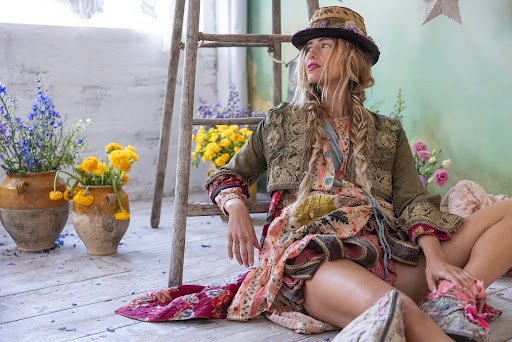
Magnolia Pearl has made collectors care about the tear, the patch, the faded bloom, and the seam that refuses to vanish. Robin Brown’s Texas-born label has become a hunt for garments that feel less like seasonal fashion and more like objects with memory.
A Scarcity Built From Story
Magnolia Pearl was founded in 2002 after Brown began making pieces by hand from found materials. One early backpack, made from kite string and old tapestry, was bought by a stranger for the exact amount Brown needed to retrieve her mother’s ashes from a funeral home. That origin still shapes the mood around the brand: grief made useful, fabric made tender, beauty pulled from ruin.
Collectors are drawn to that story because it gives the clothing a charge that ordinary luxury often lacks. Magnolia Pearl garments usually carry worn edges, soft cotton, paint marks, patchwork, and visible mending. They do not ask to look untouched. They ask to be read.
Brown’s childhood was marked by poverty, instability, hunger, and hardship. Those experiences appear to have trained her eye toward what could be rescued. A scrap could become a bag. A tear could become part of the pattern. A garment could carry hurt without being reduced to it.
The Collector Market Finds Its Pulse
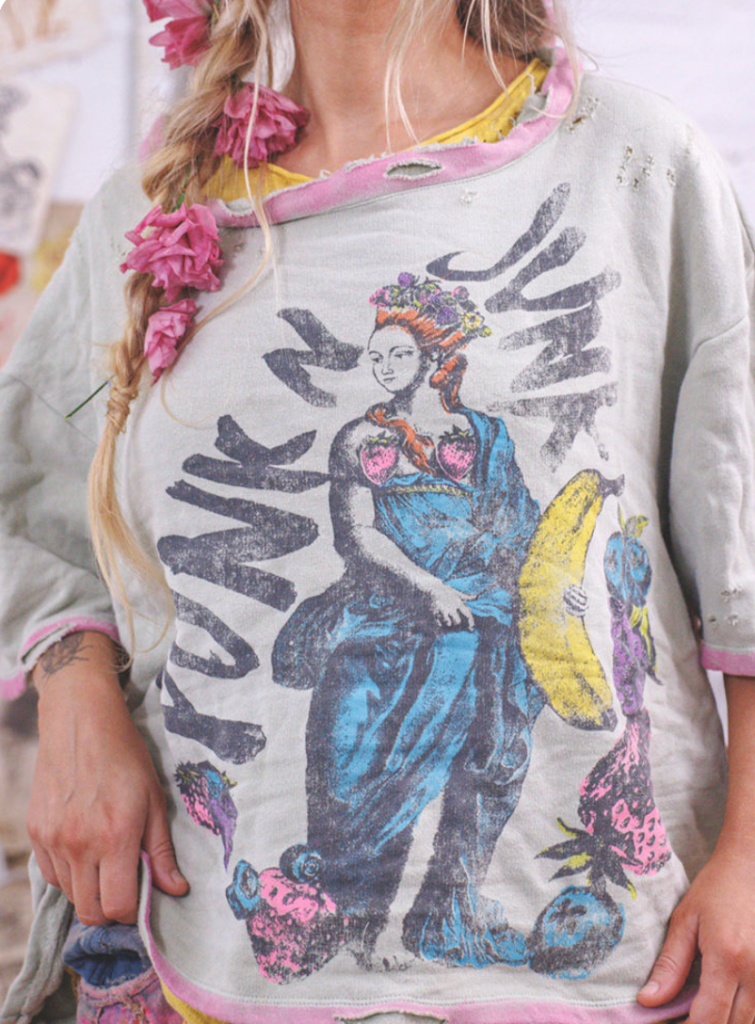
Magnolia Pearl’s resale activity has become a strong part of its appeal. Some pieces have reportedly resold for double or triple their original retail prices through consignment shops, social media groups, and collector circles. The value depends on rarity, condition, age, and demand, but the larger signal is clear: certain garments gain attention after they leave the first buyer.
That behavior is partly driven by limited releases. Once a piece disappears from the primary shop, collectors may have to search through resale groups, boutiques, or Magnolia Pearl Trade, the brand’s authenticated resale site launched in 2023. The search itself becomes part of the romance. Finding the right jacket or dress can feel like finding a letter that was meant to arrive late.
Celebrity attention has added heat to that collector market. Taylor Swift has worn Magnolia Pearl in a music video, Whoopi Goldberg has worn it on television, and Blake Lively has worn it in film. Their appearances did not turn the brand into ordinary celebrity merchandise. They helped show how the clothes can move between private longing and public image.
Frayed Edges With a Second Life
Magnolia Pearl Trade gives the collector economy a formal home. Buyers can seek pre-loved pieces, while rare samples and sold-out garments can return to view. The platform treats resale as part of the garment’s path rather than a leftover transaction.
The charitable structure adds another layer. The Magnolia Pearl Peace Warrior Foundation, founded in 2020, has raised more than $550,000 for causes that include housing for Indigenous American veterans, food and medical care for unhoused people and their pets, wild horse protection, arts education, and disaster relief. Magnolia Pearl Trade sends 25% of the final value of Magnolia Pearl Exclusive listings and all third-party seller fees to charity through the foundation.
Collectors are chasing Magnolia Pearl’s frayed-edge romance because the garments hold several stories at once. They speak to scarcity, celebrity, resale, and service. More than that, they honor the visible mark. They suggest that clothing can grow more meaningful after wear, and that beauty does not have to arrive smooth to be worth keeping.