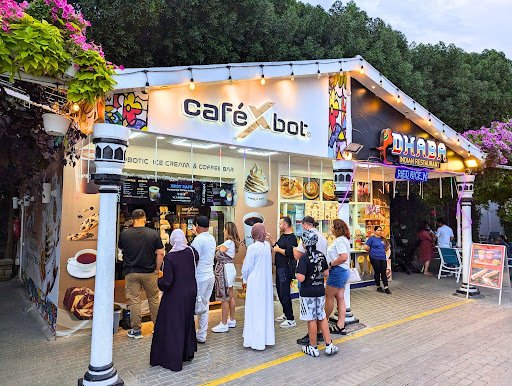
A few years ago, the idea sounded gimmicky. A robot making coffee inside a shopping mall felt more like entertainment than business. Then investors started noticing something difficult to ignore: people kept buying.
Airports, hotels, universities, and malls began filling with automated café kiosks serving espresso, milkshakes, iced drinks, and desserts without cashiers or baristas. Long after nearby cafés closed for the night, robotic kiosks kept operating. Revenue kept flowing while staff-heavy businesses shut their doors.
That reality has pushed robotic cafes into a much larger conversation about passive income in 2026. Investors exhausted by volatile markets and labor-heavy businesses are searching for assets that generate cash flow with lower daily involvement. Companies such as VLT Robotics, creator of the CafeXbot system, have entered that space at exactly the right moment.
Traditional cafés come with constant pressure. Owners manage payroll, staff shortages, scheduling problems, rising wages, and expensive leases. Robotic cafés remove much of that strain. Customers place orders through touchscreens or voice systems while machines prepare drinks automatically.
CafeXbot pushed the model further by offering more than simple coffee service. One kiosk can serve dozens of beverage and snack options from a compact footprint. Investors quickly realized the business behaves less like a restaurant and more like automated retail infrastructure.
That distinction matters.
Coffee remains one of the world’s most stable consumer habits. Millions of people buy drinks during commutes, shopping trips, study sessions, and airport layovers every single day. Robotic cafés tap directly into that routine while operating twenty-four hours daily without relying on large teams.
“People want passive income that does not consume their entire life,” a representative from VLT Robotics said. “Robotic cafés reduce much of the daily operational stress that comes with traditional food businesses.”
Financial performance has driven even more interest. Figures tied to VLT Robotics deployments show annual revenue ranging from roughly $60,000 to $300,000 depending on location quality. Some owner-operated kiosks reportedly produce returns far above many traditional passive-income vehicles.
Location remains the biggest variable.
A robotic café inside a quiet office building may struggle badly compared with one placed in an airport or major shopping center. Heavy foot traffic changes everything. Travelers, students, and mall visitors create repeat demand throughout the day, especially in places where quick service matters more than a traditional café atmosphere.
That is why many investors prefer managed models where operating companies handle location scouting, maintenance, restocking, and reporting. Investors receive revenue shares while management teams oversee daily operations.
The timing feels important too.
During the past few years, many side-hustle trends burned out quickly. E-commerce became overcrowded. Cryptocurrency swings frightened cautious investors. Rental property owners faced rising costs and tenant problems. Robotic cafés entered the conversation carrying something far more grounded: physical products people already buy every day.
Skepticism still exists. Machines require maintenance. Poor locations can weaken earnings fast. Robotic cafés are businesses, not magic money printers.
Still, momentum keeps building because the numbers continue attracting attention. A compact kiosk capable of serving customers all day without wage pressure changes the economics of food retail in a way many investors find difficult to dismiss.
Quietly, robotic cafés have moved beyond novelty. For a growing number of investors in 2026, they are starting to look like one of the clearest passive income opportunities on the market.