Stadium events have always been a stress test for cities. A sellout crowd can turn quiet streets into a maze of congestion, risky maneuvers, and frustrated drivers in a matter of minutes. Skylark Labs believes self-learning, edge-native artificial intelligence (AI) can turn those same nights into safer, smoother experiences for everyone on the road.
The company’s brain-inspired AI, developed under founder and chief executive officer Dr. Amarjot Singh, is designed to sit directly on roadside units, cameras, and patrol vehicles rather than in distant data centers. During big events, that difference becomes critical. Local systems must respond to unexpected detours, crowds spilling into intersections, and peaks in ride-hailing traffic in real time. Latency or dropped connections can turn a manageable surge into chaos. Skylark Labs is betting that an AI “brain for machines” that learns at the edge offers a better way to keep stadium nights under control.
Detecting Patterns for Strategic Crowd Management
Self-learning AI at Skylark Labs does more than just count cars. It learns what “normal” looks like for a particular venue across many game days or concert nights, then adjusts its expectations and interventions accordingly.
For instance, a system deployed outside a football stadium will see different patterns than one near an indoor arena or festival grounds. Over time, the AI refines its understanding of how crowds arrive and leave, where bottlenecks form, and which behaviors precede near misses or collisions. This accumulated experience serves as the foundation for more targeted responses in subsequent events.
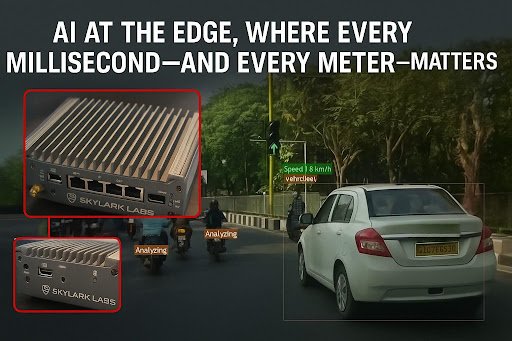
Skylark Labs’ architecture is built to capture that learning loop. Its models run on cameras and devices installed near stadiums, processing video and sensor feeds locally instead of streaming everything back to a central cloud.
Those edge devices detect violations such as illegal U-turns, blocked crosswalks, and vehicles encroaching into pedestrian-heavy zones. They can also identify patterns of risky behavior, such as sudden lane changes around drop-off zones, that cluster at particular exits or intersections.
The self-learning element appears when conditions change. Event calendars, start times, and even fan behavior do not stay static. A new ride-hailing policy, a temporary construction detour, or a change in public transport schedules can dramatically reshape flows.
Smarter Roads Built on Latest Information
Traditional rule-based systems often struggle to keep up because their thresholds and rules were tuned for “last year’s” traffic. Skylark Labs’ AI, by contrast, is designed to update its internal models during deployment. When it encounters unfamiliar patterns, it can learn from them on the device and adjust future predictions and alerts without waiting for a centralized retraining cycle.
That capability has practical implications for law enforcement and traffic agencies managing stadium events. Edge-based systems can surface early signs of trouble, such as an unusual buildup on a secondary access road or recurring near-miss situations at a pedestrian crossing, before those patterns translate into serious incidents.
Operators can then adjust lane control, signal timing, or patrol placement in near real time. The same data also feeds post-event analysis, highlighting where new signage, barriers, or policy changes might reduce friction in future games.
Data governance is another area where edge-native design helps. Cities and venue operators increasingly face scrutiny over surveillance technologies and the use of live video analytics. Skylark Labs’ model keeps raw footage and license plate data on-site by default, processing them locally and transmitting only what is necessary for enforcement, evidence, or audit. That minimizes exposure of sensitive information and can make it easier for agencies to comply with local privacy rules while still benefiting from advanced analytics.
The AI Edge Benefits: More than Safety
The economic benefits of self-learning AI are straightforward. Stadium events typically require heavy manual deployment of officers and staff to key intersections and choke points. A self-learning AI layer that anticipates where risk will concentrate, rather than reacting only after congestion appears, supports a more efficient use of limited personnel. Over time, that can mean less overtime, fewer emergency responses, and improved travel times for both fans and residents who share those streets.
Dr. Singh’s broader vision for Skylark Labs extends beyond any single venue. He often frames these deployments as part of a larger shift toward “embodied superintelligence,” in which many devices distributed across a city share distilled insights into risk and behavior. A camera near a stadium exit that learns a new pattern of dangerous stopping behavior can, in principle, share that insight with other units operating at similar sites, without transmitting raw video. The result is a network that gets smarter collectively, not just one device at a time.
Stadium nights will likely always be loud, crowded, and unpredictable. Skylark Labs is not trying to eliminate the energy that makes live events attractive. Its goal is to ensure that the streets around those venues remain manageable, even when tens of thousands of people move at once. By installing a self-learning AI brain on devices closest to the road, the company hopes to give traffic managers and public safety officials a more adaptive, less fragile way to guide crowds during the busiest nights of the year.