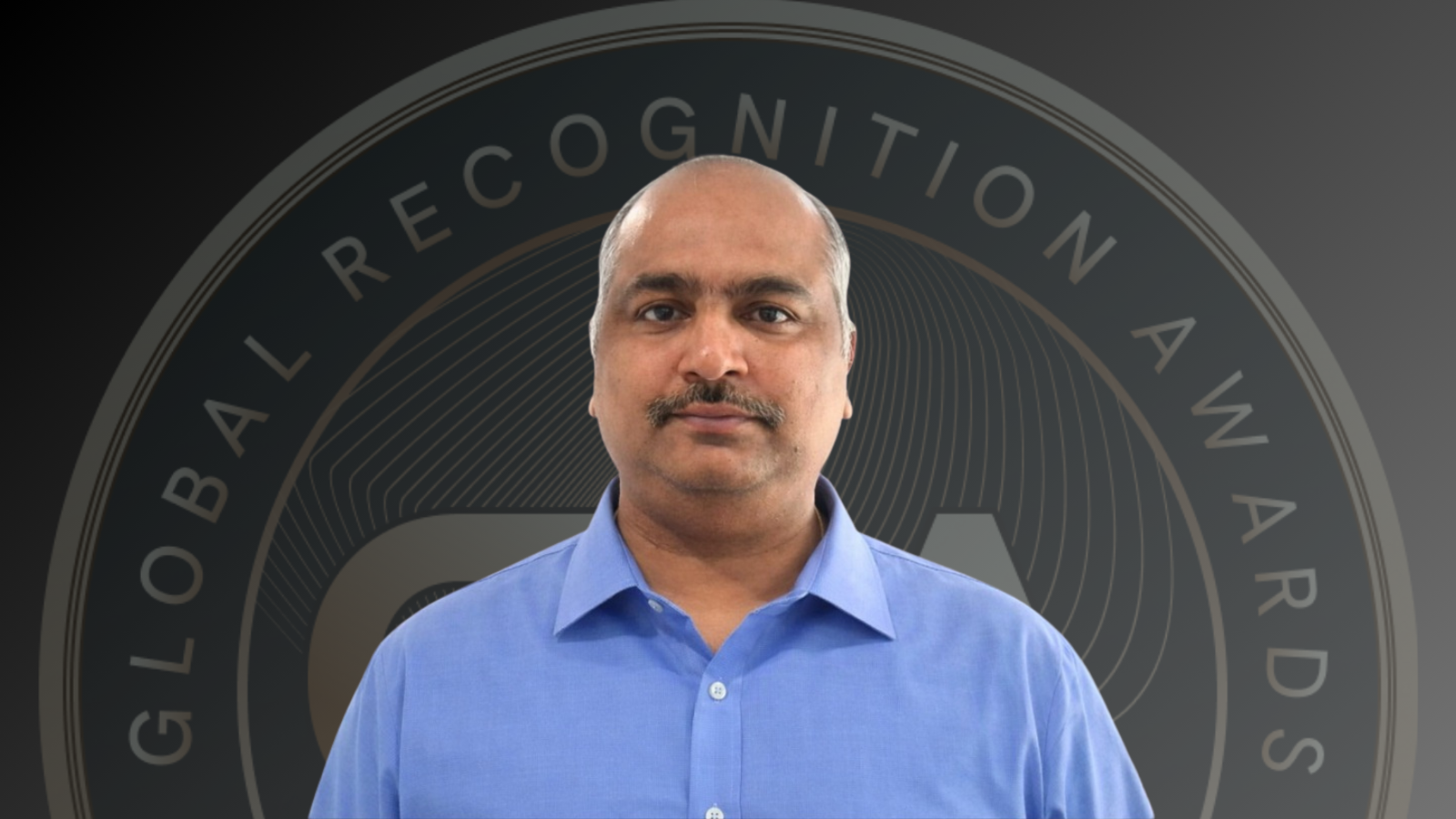
Some engineers build systems, while others change how entire industries think about what systems can do. Sreedar Radhakrishnan has spent more than two decades being the latter, working quietly, methodically, and almost entirely without fanfare.
Today, he works on two of the most consequential shifts in enterprise technology: the mass migration of regulated industries to the cloud and the arrival of generative AI as a production-grade tool for organizations that cannot afford to get it wrong. His recognition with a 2026 Global Recognition Award in Leadership and Innovation is less a surprise than a formality, an acknowledgment of work that has been reshaping how global financial institutions operate for years.
The story, though, starts long before any award. It starts in India, with foundational infrastructure roles that most engineers treat as stepping stones. For Radhakrishnan, they were classrooms.
Built From The Ground Up
Early stints at Accenture, Hanu Software Solutions, Trigent Software, and AXA Technology Services gave Sreedar something that years at prestigious firms often cannot: a working fluency in the unglamorous layers of enterprise technology, including networking, virtualization, automation, and infrastructure at scale. He wasn’t building products for the press. He was learning how large organizations actually function, and where they break.
That grounding paid off when he moved into cloud architecture roles, eventually landing at one of the world’s leading global cloud technology providers as a Cloud Solution Architect focused on financial services and insurance. He led end-to-end Azure cloud adoption programs, covering data center migrations, disaster recovery deployments, and platform modernization for some of the most demanding enterprise accounts in regulated industries. The work was complex, the margin for error slim, and the clients unforgiving. He delivered.
A stint at Amazon Web Services as a Senior Solutions Architect further deepened his range of expertise. Guiding enterprise customers through migration and modernization, designing architectures that balanced security, scale, and cost, he developed the kind of cross-platform perspective that most architects never acquire, because acquiring it requires doing the work on both sides. That experience gave him a vendor-agnostic lens that continues to serve the regulated clients he works with today.
Where AI Meets Accountability
The question that defines Sreedar’s current work is deceptively simple: how do you deploy artificial intelligence inside organizations where a compliance failure can carry legal and financial consequences measured in the tens of millions? It is not a question that most engineers are positioned to answer, because answering it requires fluency in the technical and the institutional, understanding not just what AI can do, but what regulators will accept and what risk officers will approve.
As a Technical Specialist at the same global technology provider, Sreedar builds generative AI solutions using Azure AI Foundry, Azure OpenAI, and Azure AI Search, and designs the governance frameworks that allow those tools to operate responsibly in heavily regulated environments. He oversees Kubernetes-based platforms supporting AI, data, and mission-critical workloads for financial services enterprises, platforms where uptime, security, and compliance are non-negotiable. One metric captures the commercial weight of that work: he drove over 320 percent growth in Azure consumption within a single year, earning the company’s Gold Club Award in the process.
“Sreedar Radhakrishnan exemplifies the kind of leader this award was created to honor, someone who operates at a world-class level not just technically, but in his ability to guide organizations through change with accountability, precision, and lasting impact,” said Alex Sterling, a spokesperson for Global Recognition Awards. What Radhakrishnan has done, moving AI from controlled pilots to production-scale deployment in regulated environments, is the kind of work that only gets recognized once it is already proven. By that standard, he has been award-worthy for some time.
The Quiet Work Of Leading People
Strip away the certifications, and there are many, covering AWS Certified Solutions Architect: Professional, AWS Certified Security: Specialty, Microsoft Certified Azure Solutions Architect Expert, Azure Security Engineer Associate, VMware Certified Professional, ITIL Version 3 Certified, IBM Certified in AIX, and more, and what remains is a career defined as much by mentorship as by architecture. Radhakrishnan has built high-performing engineering teams throughout his career, treating the development of talent as part of the job rather than a footnote.
The Global Recognition Awards panel evaluated his contributions using the Rasch model. This measurement framework builds a linear scale across evaluation categories to allow fair comparisons between candidates excelling in different domains. He scored at the highest levels across Leadership and Innovation, categories that, in his case, are not separate achievements but two expressions of the same professional discipline.
What Sreedar’s career makes clear is that the most lasting contributions to enterprise technology rarely arrive with headlines attached. They arrive through years of solving hard problems in demanding environments, building the trust of the people who have the most to lose, and delivering the right answer before anyone thought to ask. That, more than any single award or metric, is the measure of his work and why it continues to matter.