There is a strange, quiet violence to forgetting who you are. It’s not the dramatic kind that makes for good TV, but the slow kind—the kind that creeps in under dim lights, loud music, and $1,000 suits.
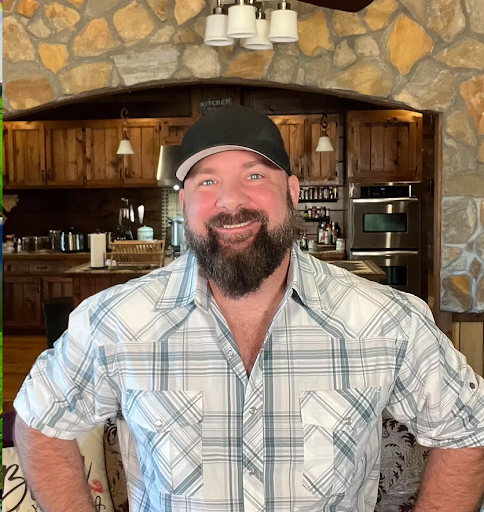
For years, Matthew Gauger was the man behind the velvet rope: a nightclub manager, a familiar name in nightlife, a figure of access and excess. But then, as with so many, the pandemic arrived and stripped the scaffolding. The music stopped. The doors closed. And with nowhere to perform, he faced the long, unlit mirror of his own life.
Gauger did not turn toward a brand strategy or a digital hustle, as many in his world did. He turned to the dirt.
From Nightlife to Seed Life
“I started a garden with no clue what I was doing,” Gauger recalls. “I just wanted to see if something would grow.”
It turns out something did. Today, under the social handle @greenhorngrove, Gauger speaks to an audience of over 1.6 million followers across platforms—sharing lessons not just about gardening but about healing, humility, and hope. What started as lighthearted content became something deeper: instruction in self-sufficiency, storytelling rooted in shared human need, and a call to community resilience.
But the true harvest has been off-screen.
The Rise of Here We Grow
In 2023, Gauger founded Here We Grow, a nonprofit born from his desire to turn digital impact into real-world aid. The organization’s goals are expansive yet deeply local: to combat food insecurity, restore dignity through work and learning, and empower individuals with the tools to grow their own nourishment—both literally and spiritually.
The nonprofit began with The Greenhorn Guides, an open-source bank of eBooks and videos offering free education in homesteading, gardening, and self-reliant living. “Education is a gift,” Gauger says, “and gifts are meant to be given.”
But Here We Grow didn’t stop at information.
They began sending seed kits—free of charge—to people across the U.S., accompanied by calendars, layout plans, and step-by-step instructions to create “turnkey gardens.” These kits are designed not only to teach but to equip, bridging the growing divide between food access and food agency.
Next came community gardens: installations at schools, churches, and senior living facilities. Then disaster recovery. When Hurricane Helene devastated parts of western North Carolina, Here We Grow partnered with Operation Shelter and helped raise $500,000 for emergency housing, food, and clean-up efforts. Most recently, the charity has funded the construction of a 150-person volunteer camp that will support the building of 300 new homes.
Healing Through Dirt and Dignity
Gauger’s vision doesn’t end with soil and seedlings. The long-term plan includes developing care farms—40-to-50 acre homestead communities that blend ecological farming with therapeutic support.
These farms are envisioned as sanctuaries where veterans with PTSD, survivors of domestic violence, youth with special needs, and the elderly can engage in ecotherapy—the proven psychological benefit of working with the land. These centers will also offer EMDR therapy and group counseling, creating an intersection between mental health, food justice, and community repair.
“We’re not just trying to feed people,” he explains. “We’re trying to rebuild what it means to belong to each other.”
A Community That Transcends Identity
What makes Gauger’s following so unique isn’t just its size—it’s its diversity. Here We Grow has become a meeting place for “everyone from the corporate suit to the sustainable farmer.” The content resonates across class lines, geographies, and generations.
Gauger has seen first-hand how a conversation about tomatoes can dissolve decades of division. “Common interests are more powerful than common enemies,” he says. “You see two people who wouldn’t agree on anything else suddenly laughing over compost ratios.”
This ability to build bridges—without posturing, without pandering—is one of the most quietly radical aspects of Gauger’s work. He doesn’t lean on outrage. He doesn’t bait for clicks. He plants. He teaches. He gives.
The Face of a Different Kind of Influence
While many creators chase brand deals or virality, Gauger treats his platform as a means to an end—a megaphone for service. The end goal isn’t likes. It’s lives changed.
From providing housing to empowering families with garden plots, from helping communities respond to natural disasters to educating people on growing their own food, Gauger has redefined what it means to be an “influencer.” And he’s done it without selling out, selling fear, or selling himself.
Where the Work Grows Next
As of this writing, Here We Grow continues to broaden its reach—distributing educational materials, planning new community gardens, and supporting long-term recovery efforts in disaster-affected regions. Meanwhile, Gauger is preparing for the release of his first book, a reflection on purpose, simplicity, and living with intention.
He remains active on social media through @greenhorngrove, where he shares stories, lessons, and updates from the same homestead he once purchased as a complete beginner.
What began as a personal pivot has grown into something much larger: a nonprofit, a free learning platform, and the seed of a sanctuary—for the overlooked, the displaced, and anyone searching for a way to grow something meaningful.
And in a time of noise and division, Here We Grow stands for something quietly radical: the belief that everyone deserves food, purpose, and a place to belong.