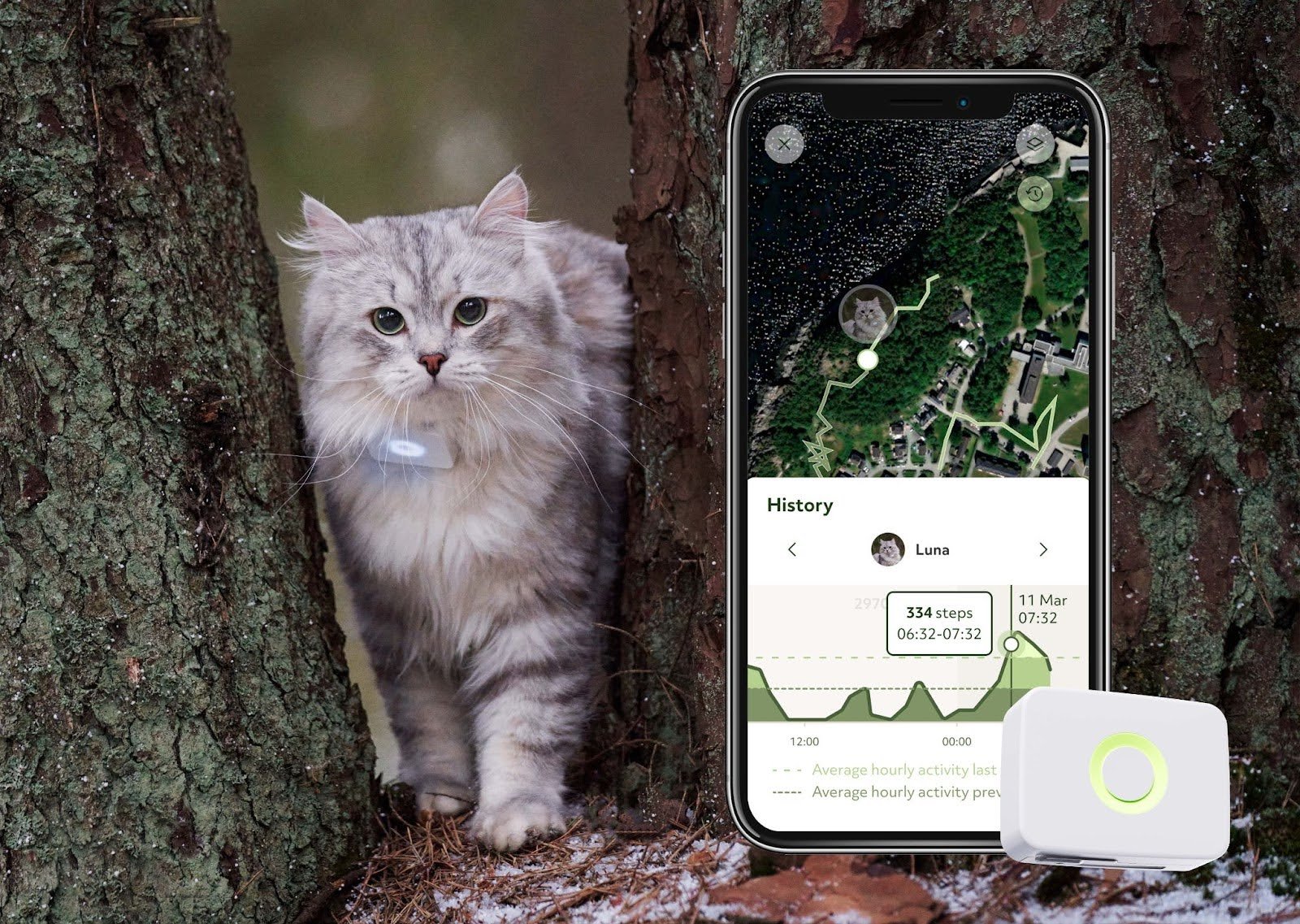
The story begins, as many modern technology stories do, with a map. Not a political map, or a weather map, but a quiet, personal one: a cluster of lines and dots showing where a single cat has gone in the last 24 hours. A decade ago, that kind of map barely existed outside of research projects. In 2026, it is becoming common enough that cat owners across Europe can open an app and trace, step by step, the route their animals take through stairwells, gardens, sheds, and alleys.
Those private maps sit atop a rapidly growing public trend. The pet GPS trackers market is projected to more than double by 2031 as owners demand real‑time location and health data for their animals. Cellular‑enabled GPS devices now account for nearly half of that revenue, driven by their ability to deliver continuous tracking and instant alerts to smartphones. At the same time, the broader pet wearable market, which includes collars, harnesses, and health monitors, is expected to reach several billion dollars by the early 2030s.
In that broader surge, cats occupy an awkward middle ground. They are deeply woven into households but famously resistant to control, slipping through physical and social boundaries in ways that make them both beloved and hard to monitor. For engineers, they represent a frontier: small, agile, and in constant contact with architecture that disrupts signals. For owners, the familiar worry is: what happens when the animal that always comes back does not?
Lilcat, a Norwegian brand that describes its device as “Norway’s best GPS tracker and activity monitor for cats,” is trying to answer that question on both technical and emotional levels. Spun out of Lildog, a GPS tracker and activity‑tracking company for dogs, Lilcat takes a hardware platform proven in Norway’s high mountains and deep valleys and shrinks it into a small device designed for a cat‑safe collar. In doing so, it has become a test case for what “leadership” in pet tech looks like when the animals in question ignore property lines and the technology has to keep up.
A Market Inflection Point And A Norwegian Answer
The significant current event shaping Lilcat’s context is not a single product launch, but an inflection point in the GPS tracking sector itself. By 2026, analysts estimate the pet GPS tracker market will exceed $430 million in annual revenue and continue growing at more than 13% per year through 2031. The drivers are familiar: rising pet ownership, the “humanization” of animals, increasing concern about theft and accidents, and rapid improvements in GPS, LTE‑M, and NB‑IoT connectivity.
Within that landscape, devices that combine location tracking with health and activity monitoring are the fastest‑growing segment. These tools do more than display a dot on a map; they record steps, sleep patterns, temperature, and other behavioral metrics, positioning themselves as preventive health devices as much as safety nets. The competition is fierce. Independent tests and rankings routinely highlight brands for overall performance, while noting that the “best” tracker varies by geography, coverage, and the owner’s tolerance for subscription fees and charging routines.
Lildog’s entry into this space began not with cats but with dogs that disappeared into Norway’s forests and fjords. The company’s core claim is engineering‑driven: that it uses both NB‑IoT and LTE‑M networks to provide what it calls “the world’s best coverage” for GPS trackers, maintaining a connection in signal‑critical environments where traditional devices cut out. Its trackers are lightweight, waterproof, shockproof, and built to withstand mud, snow, and rough play, offering three to five days of battery life and fast recharging.
“Most people don’t realize that signal loss is the number one reason GPS trackers fail when you need them most,” founder Morten Sæthre has said. “We built Lildog to solve this problem first, before adding any other features.”
Lilcat takes that same foundation and adapts it for the feline frontier. The cat‑specific tracker is small enough to fit comfortably on a breakaway collar, yet still houses GPS, cellular radios, a temperature sensor, and an activity monitor. The shared app shows real‑time location, location history, step counts, rest patterns, and an avatar that mirrors the animal’s movement, while sound and LED light functions help owners find a hiding cat in low light.
Lilcat’s significance lies in how it translates a Norwegian design philosophy: “if it works in high mountains and deep valleys, it will work anywhere,” into a consumer product for a species not known for staying in one place. From a consumer’s perspective, it turns a familiar anxiety into something that can be watched, if not entirely controlled.
Mapping Second Homes And Invisible Dangers
Lilcat’s website asks a question that sounds like marketing mischief but is grounded in its data: “Did you know that most cats have more than one home?” The company invites owners to “discover their territory” and “know every detail of your cat’s daily life,” referring to a “map history” feature that logs the routes your cat takes over days and weeks. Those routes, when viewed in aggregate, challenge the idea that a cat belongs to a single household in any practical sense.
“Most cats have more than 2 homes, and their owners are oblivious,” Sæthre says. He offers it as an observation drawn from patterns the devices reveal. One cluster of points surrounds the official home address. Another cluster, often just a few doors down, shows hours spent inside a neighbor’s house. Sometimes a third appears around a farm building, a tree line, or a particular patch of garden. A cat that seems, in the human narrative, to be loyal to one family is, in the tracker’s record, splitting its time across two or three invisible households.
“The cats could get fed the wrong food or more often than desirable, sending cats off the chonk‑charts,” Sæthre adds, leaning on internet slang for overweight pets. The joke masks a serious concern. Veterinary guidance for cats with kidney disease, allergies, or weight issues often assumes tightly controlled diets.
A cat that eats a measured portion of prescription food in the morning and then spends the afternoon being fed treats or cheap dry food elsewhere can quietly undermine months of careful management. By tying unexplained weight gain or lethargy to documented visits to other kitchens, the trackers give owners information they would not otherwise have.
The same technology also highlights a more acute category of danger: when a cat stops moving altogether. Lilcat describes itself as “an early warning system,” urging owners to pay attention to sudden changes in activity levels or long periods of immobility at odd locations. Across the broader tracker market, case stories have emerged of cats found locked in garages, trapped in sheds, or stuck after falls, even though a device showed them stationary for hours in a particular spot.
Sæthre compresses these scenarios into a stark line: “The era of ‘missing cat posters’ is over. No more cats locked into garages or sheds, stuck in empty pools, or unable to return home after being chased into the wilderness by prey animals or other outdoor threats.”
Reality, of course, is less tidy. Collars can break or be removed, signals can fail, and batteries can run down earlier than expected. But even imperfect data changes the calculus. Where an owner once had only absence, they now have at least one hard clue: a last known location, a final cluster of pings, a radius within which to search.
Magnetoreception Meets Environmental Noise
Beneath the marketing language and growth curves lies a deeper question: what these devices are compensating for. Cats, like many animals, appear to use Earth’s magnetic field as one of several cues to orient themselves in unfamiliar territory, a biological sense known as magnetoreception. Under calm, low‑noise conditions, that “vague compass function,” as Sæthre calls it, can help them choose direction and find their way back.
“In today’s modern world full of environmental noise, a little assistance could be helpful,” Sæthre continues. “At the very least, a peace of mind for loving cat owners.” It is an argument that repositions technology not as a replacement for instinct, but as a corrective for a problem humans have created. By cluttering the magnetic landscape, the reasoning goes, people have chipped away at a natural orientation system without noticing. A device that layers man‑made signals onto that damaged background becomes less an intrusion than a kind of prosthesis.
That framing does not resolve the ethical questions these tools raise. A map of a cat’s movements is also, indirectly, a map of human behavior: which doors are left open, which yards are welcoming, which garages are often unattended. It can reveal acts of quiet kindness and, just as easily, sources of risk. It can strain relationships in a block where households suddenly discover that what felt like “my cat” has, in fact, been everyone’s.
Lilcat’s own materials try to balance the allure of total visibility with gestures toward restraint. The company emphasizes that its devices are developed and produced in Norway, highlights sustainability as a core value, and includes a cat‑safe collar and a 14‑day money‑back guarantee.
In that sense, Lilcat’s attempt to “redefine pet tech leadership” is less about adding another feature to a crowded field than about insisting that leadership rests on reliability and context. Precision GPS, in this view, is not merely finer coordinates on a screen but a clearer understanding of what those coordinates mean in a world where ancient instincts and modern noise collide. Sæthre’s most revealing line may not be about coverage or engineering, but about the limits of what his product should do.
“We are not trying to stop cats from being cats,” he says. “We just want to make sure that when the compass fails them—or when the world fails them—someone can still find their way to where they are.”