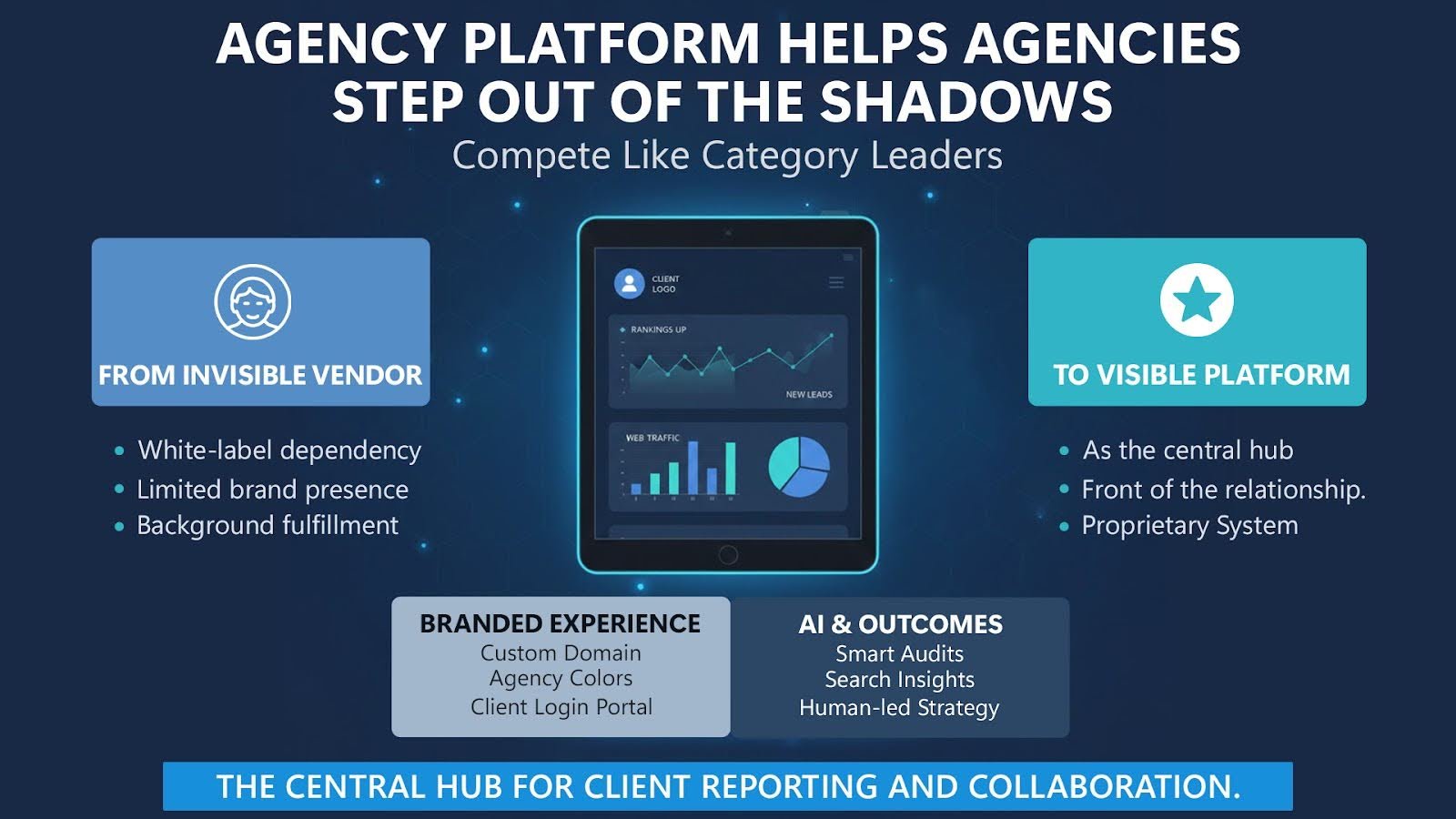
A quiet shift has taken hold across marketing firms that sell services under their own names but rely on unseen systems to deliver results at scale. Agency Platform sits inside that shift, offering a white-label structure that allows agencies to present a full suite of services without building each function from scratch. What sets it apart is how it merges software with service delivery into a single workflow, one that spans search visibility, paid campaigns, social media, and website management under one branded interface.
Founded in 2003, the company has delivered more than 1,50,000 campaigns for over 1,200 agencies across the United States, the United Kingdom, Australia, and other markets. Its workforce has grown to 500 employees, reflecting steady expansion tied to rising demand from agencies that need to manage complex marketing operations without increasing internal headcount. The platform’s design allows agencies to operate under their own brand while relying on a backend system that handles execution, reporting, and analysis.
“Agencies want control over their brand and client experience, but they also need a system that supports growth without adding operational strain,” a company spokesperson said. “Our goal has been to give them both without compromise.”
A System Built for Agency Ownership
Agency Platform’s structure centers on a customizable dashboard that agencies present as their own. Clients see a unified interface where they can track performance across search rankings, paid campaigns, and social channels. Behind that interface sits a workflow that manages audits, reporting, and campaign adjustments with minimal manual input.
Early versions of white-label services focused on outsourcing tasks. Agency Platform reframed that model into a continuous system where data feeds directly into decision-making tools. Audits lead to recommendations, recommendations feed into execution, and execution loops back into reporting. Each step connects to the next without requiring separate tools or vendors.
That system matters most for local and national search campaigns, where small adjustments in visibility can drive measurable changes in traffic and lead generation. Agencies use the platform to manage listings, optimize content, and monitor rankings across specific cities or regions. The same structure applies to broader campaigns, allowing agencies to scale from local clients to national accounts without changing their operational model.
“We built a system where agencies can move from strategy to execution to reporting without breaking the flow,” said a company representative. “That continuity is what allows them to grow while maintaining quality.”
The Rise of Machine-Led Marketing Workflows
A major driver behind the platform’s growth lies in its investment in machine-led processes that handle tasks once managed by teams of analysts. Campaign audits run through automated systems that scan for gaps in visibility, content opportunities, and technical issues. Reporting tools compile performance data into structured summaries that agencies can present to clients without manual formatting.
Those systems extend into newer search environments shaped by large language models, where visibility depends on how information is structured and interpreted rather than simple keyword placement. Agency Platform has built tools that analyze how brands appear in these environments, giving agencies a way to adjust strategies for a changing search ecosystem.
Paid campaigns and social media management follow the same pattern. Campaign data feeds into systems that suggest adjustments based on performance trends, allowing agencies to refine targeting and budget allocation without constant manual review. The result is a workflow that reduces time spent on repetitive tasks while increasing the speed of decision-making.
Such changes reflect a broader shift in how marketing work gets done. Agencies once relied on teams to handle each stage of a campaign. Systems like Agency Platform compress those stages into a single environment where data, execution, and reporting interact continuously.
From Service Provider to Strategic Backbone
Agency Platform’s role has moved from service provider to operational backbone for many of the agencies it supports. Clients rely on it to maintain consistent performance across multiple campaigns while presenting results under their own brand. That arrangement allows agencies to focus on client relationships and strategy rather than production work.
Growth has followed that shift. Agencies entering the platform gain access to a full set of services, from search optimization to paid advertising, without building internal departments for each function. The platform’s pricing structure has made it accessible to smaller agencies while still supporting larger firms managing high volumes of campaigns.
Long-term plans point toward deeper adoption of machine-led systems and expanded support for emerging search formats. Agency Platform aims to strengthen its position as a partner that agencies depend on for both execution and insight, helping them maintain visibility across traditional search engines and newer platforms driven by language models.
A system built over two decades now sits at the center of how many agencies operate behind the scenes. Clients see a brand they recognize. Agencies see a structure that supports growth without adding complexity. Agency Platform remains the link between those two views, turning a fragmented process into a single, continuous operation.