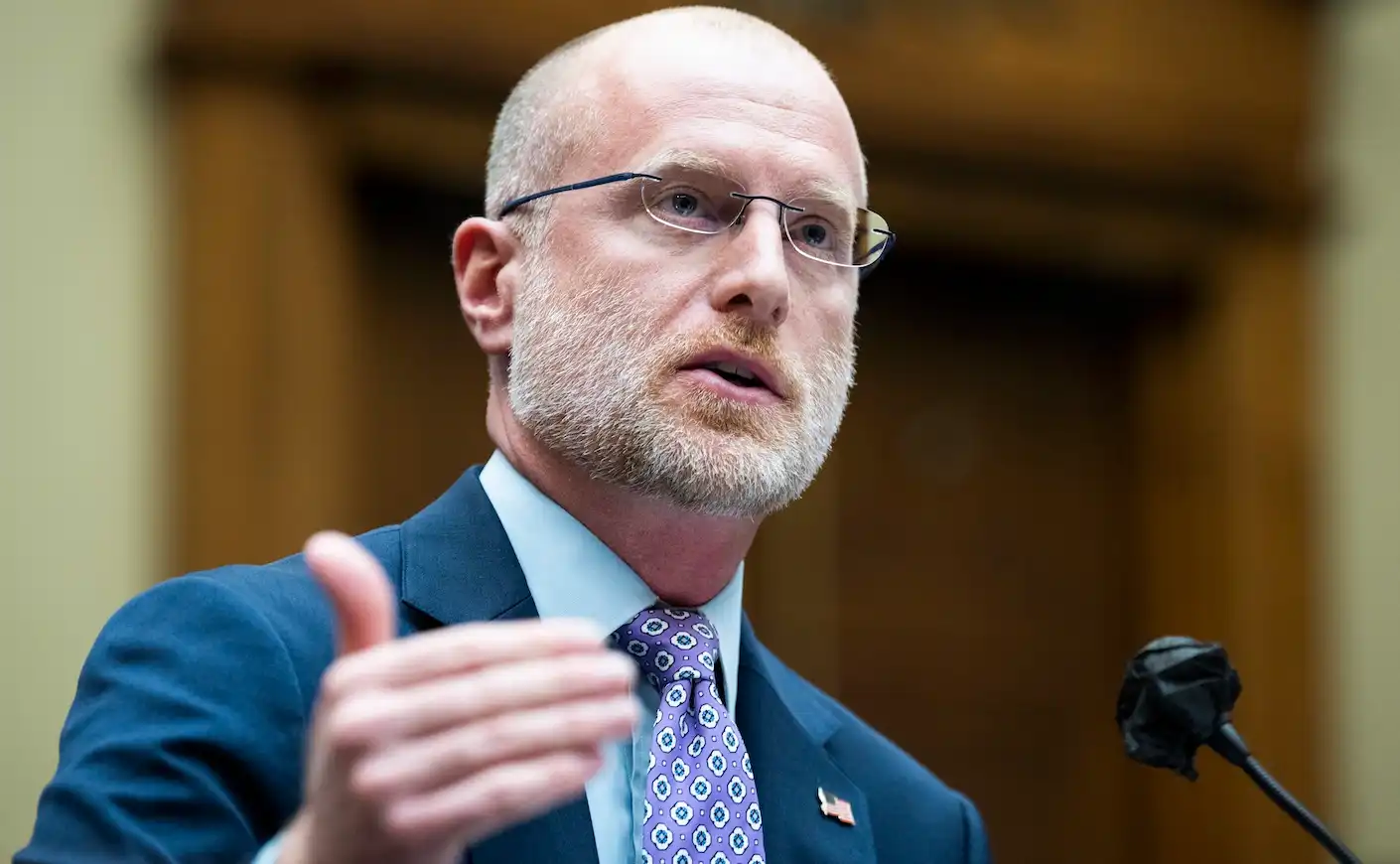
During a monthly press conference streamed on YouTube, Federal Communications Commission Chairman Brendan Carr detailed a significant shift in how the agency plans to enforce its long-standing “equal time” rule, a move that could have wide-ranging implications for daytime talk shows such as The View and late-night staples like The Tonight Show.
For decades, many talk shows have operated under an exemption that allowed them to invite political candidates without triggering equal-time obligations for their opponents. That exemption dates back to 1996, when the FCC determined that The Tonight Show with Jay Leno qualified as a “bona fide news interview,” placing it outside the scope of strict equal opportunities requirements. Similar logic has since been applied broadly to daytime and late-night programs.
According to Carr, that era of leniency is coming to an end. He said the FCC now expects to take a far more aggressive posture in responding to complaints from candidates who are excluded from such programs, regardless of whether they represent major political parties or smaller third-party movements.
“Congress was clear that the FCC has a role with respect to bona fide news, because otherwise, I think the statutory history is clear,” Carr said. “They were worried that TV programmers would broadly take advantage of trying to claim they were bona fide news when they weren’t. But if you’re fake news, you’re not going to qualify for the bona fide news exception.”
Carr explained that the policy shift is rooted in how the 1996 Leno exemption has been interpreted over time. The FCC, he said, believes that precedent has been stretched beyond its original intent, particularly in broadcast television. As a result, the agency will scrutinize claims that talk shows qualify as legitimate news interviews exempt from equal-time rules.
When asked whether similar scrutiny would extend to talk radio—an arena often criticized for its conservative tilt—Carr drew a distinction. He said the immediate concern stems from broadcast television precedents, not radio, though he acknowledged that the equal-time rule applies to both.
“There wasn’t a relevant precedent that we saw that was being misconstrued on the radio side,” Carr said. “Of course, as you know, the rule applies to broadcast, radio and TV, but that one was focused on those TV precedents.”
That interpretation was swiftly challenged by Democratic FCC Commissioner Anna Gomez, who held a separate press conference to voice strong opposition to the change. Gomez emphasized that the equal-time rule is not limited to television and must apply evenly across all broadcast media, including radio.
“We must keep in mind that the primary motivation for this action was to lend a hand to the political operation of this administration, not to help consumers,” Gomez said. “These rules apply to all broadcasters, television and radio, and they must be applied evenly to the administration’s friends and critics alike.”
The rule change has already sparked reactions from late-night television hosts. Both Stephen Colbert and Jimmy Kimmel addressed the issue on their shows, highlighting the practical and philosophical challenges it poses. Pennsylvania Governor Josh Shapiro appeared on The Late Show with Stephen Colbert and The View this week. Although Shapiro is running for reelection, the official campaign window has not yet begun, meaning his appearances will not serve as an immediate test case for the new enforcement approach.
Kimmel, however, used his monologue to criticize what he sees as an outdated regulatory framework. “This isn’t the ’50s anymore,” he joked. “Back then there were only three major networks. Now we’ve got cable, streaming, satellite, podcasts, social media. There are thousands of outlets now.” He pointed out that while broadcast television accounts for a shrinking share of total viewership, it remains uniquely bound by equal-time rules.
Carr responded directly to Kimmel’s comments during his press conference, agreeing in part with the host’s assessment of the modern media landscape. However, he defended the continued relevance of broadcast-specific regulations.
“This rule applies uniquely to broadcast,” Carr said. “Some people have said that because of the rise of cable channels and other distribution means, it doesn’t make sense anymore to have unique broadcast rules. To that, I would say: one, that’s ultimately up for Congress to decide, not for us to ignore the law. And two, it may cut the other way—if you don’t want to comply with the public interest standard, there are plenty of other ways to distribute your content.”
Gomez, meanwhile, issued a stark warning about what she views as the politicization of the FCC. “As if there was any doubt, the last few weeks have shown that this FCC is no longer independent,” she said, calling the rule change “a misguided announcement meant to once again threaten late night and daytime shows who dare to report the news or speak out against this administration.”
She urged broadcasters not to retreat from political coverage or critical commentary out of fear. “The guidance issued recently by the FCC was a threat,” Gomez said, “but it did not change your fundamental First Amendment right to broadcast newsworthy content. The threats are the point.”
As the FCC prepares to enforce the equal-time rule more strictly, broadcasters are left to navigate a complex and politically charged regulatory environment—one that could reshape how political figures appear on some of the most influential shows in American television.