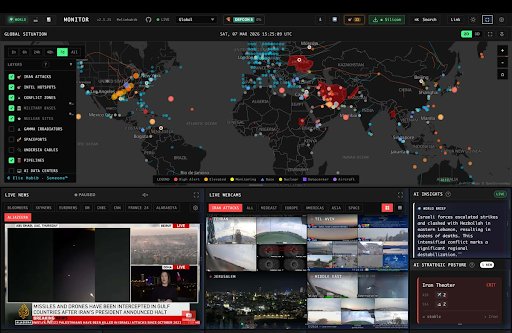
In the sprawling digital bazaar of the 21st century, where data flows like invisible rivers and threats can emerge from a single keystroke, security guardians are no longer just soldiers or spies. Increasingly, they are engineers, mathematicians, and the quiet architects of artificial intelligence. This is the world where Evo Tech has carved its niche – a world where algorithms, not armaments, define national security’s front lines.
A New Kind of Arsenal
The central thesis is clear: Evo Tech’s focused approach to AI for security and intelligence exemplifies how specialization, rather than scale, redefines the future of defense. In a market crowded with tech giants and sprawling platforms, Evo Tech stands out by doing one thing exceptionally well – building adaptive AI systems that empower intelligence agencies to see what others miss.
Consider the numbers. In 2023, the world produced 97 zettabytes of data; by 2025, that figure is expected to reach 181 zettabytes. For intelligence agencies, this is both a blessing and a curse. The sheer volume of information means that 98 percent of intelligence data goes unanalyzed, lost in the digital ether. Evo Tech’s Evolution AI platform is designed to change that equation, transforming raw data into actionable insight at machine speed.
“What most people do not realize is that approximately 98 percent of intelligence data goes unanalyzed due to sheer volume,” notes Maria Pulera, Evo Tech’s representative. “As intelligence challenges grow in complexity, the company stands ready to meet and exceed these demands with innovative technology solutions.”
From Haystacks to Needles
Evo Tech’s approach is reminiscent of a master jeweler sifting through mountains of sand to find the rarest gem. Their Evolution AI platform doesn’t just automate data analysis; it learns, adapts, and evolves in real time. This means that as threats morph – from cyberattacks on power grids to disinformation campaigns – Evo Tech’s tools morph with them, identifying patterns and anomalies that would elude even the most seasoned analyst.
The company’s breakthrough came in early 2024, when its AI system reportedly predicted three major global security events weeks before traditional intelligence methods. This was not just a technical achievement; it was a paradigm shift. Suddenly, the conversation was no longer about whether AI could help, but about how much responsibility it should have.
Augmenting, Not Replacing, Human Judgment
There is a temptation to see AI as a replacement for human expertise, but Evo Tech’s philosophy is more nuanced. Their systems are designed to augment, not supplant, the judgment of seasoned intelligence professionals. In practice, this means automating the grunt work – sifting through petabytes of data, flagging anomalies, and surfacing leads – so that human analysts can focus on strategy and decision-making.
The results are striking. Early adopters of Evo Tech’s platform reported a 312 percent increase in successful intelligence operations in 2024, highlighting the strength of human-machine collaboration. The metaphor here is not of a robot taking the wheel, but of a co-pilot scanning the horizon for turbulence, freeing the pilot to chart the course.
“We are not just building better algorithms, we are creating an entirely new paradigm for how intelligence operations function,” Pulera explains. “We enhance decision-making and operational efficiency through real-time, adaptive intelligence solutions.”
Navigating the Ethical Minefield
Yet, with great power comes great responsibility. The integration of AI into national security is not without its risks. There are concerns about reliability, accountability, and the potential for unintended consequences. Automated systems can make mistakes, and in the high-stakes world of intelligence, a single error can have far-reaching implications.
Evo Tech’s answer has been to build transparency and adaptability into its systems. The platform’s adaptive learning ensures it can respond to new threats, but always with human oversight. This is crucial in an era where the line between surveillance and privacy is razor-thin, and where the misuse of AI could undermine the very values it is meant to protect.
The international community is beginning to grapple with these questions. Policymakers and technologists alike are calling for robust ethical frameworks to guide the deployment of AI in national security. The challenge is maximizing these tools’ benefits without creating new vulnerabilities or eroding public trust.
A Niche Amid Giants
In the broader context, Evo Tech’s success is a lesson in the value of specialization. While tech behemoths chase the following big thing – autonomous vehicles, general AI, or smart cities – Evo Tech has quietly built a reputation as a trusted partner for intelligence agencies and critical infrastructure operators. Their focus on security and adaptability has allowed them to move quickly, innovate boldly, and earn the confidence of some of the world’s most demanding clients.
It’s a reminder that in the age of digital abundance, depth can matter more than breadth. The company’s niche approach has enabled it to anticipate and respond to threats others overlook, turning the overwhelming flood of data into a strategic asset.
Looking to the Horizon
The future of AI in national security is both exhilarating and daunting. Forecasts suggest the global AI market will reach $1.3 trillion by 2030, with security and intelligence applications at the forefront. As nations digitize their defenses and adversaries grow more sophisticated, the demand for adaptive, reliable AI will only intensify.
Evo Tech’s journey is emblematic of a larger trend: the shift from brute-force analysis to intelligent, adaptive systems that can keep pace with a rapidly changing threat spectrum. The company’s story is not just about technology but the enduring partnership between human ingenuity and machine precision.
“The real improvement is not in the technology itself but in how it enables us to understand our world in ways we never could,” Pulera reflects. “We are not just building tools for intelligence agencies, we are creating systems that help humanity make sense of an increasingly complex global environment.”
Conclusion: The Promise of Partnership
Ultimately, Evo Tech’s niche is more than a business strategy – it is a philosophy rooted in humility and ambition. The company recognizes that technology alone cannot solve the challenges of the digital age. The marriage of human judgment and machine intelligence, specialization and adaptability, will define the next era of security and intelligence.
As the digital frontier expands and the threats of tomorrow take shape, Evo Tech’s story offers a hopeful blueprint: that with the right tools, the proper focus, and the correct values, even the quietest innovators can help keep the world a little safer, one algorithm at a time.