May 28, 2026
Byline: Shem/Baden Bower · Photo courtesy of Milton Coffee Co.
Since the end of July, European consumers have had new legal backing for keeping their products longer. The EU’s Right to Repair Directive was adopted in June 2024, and member states had to start applying it from 31 July 2026. The first products it covers are household goods such as washing machines and phones, and more categories can be added over time. The signal to manufacturers is plain. Products sold in Europe are expected to last, and to be repaired rather than thrown away. European CommissionClaimlane
Milton Coffee Co., a coffee hardware company based in Milton, Georgia, plans to enter European markets with a machine built on that same principle.
A machine designed to stay
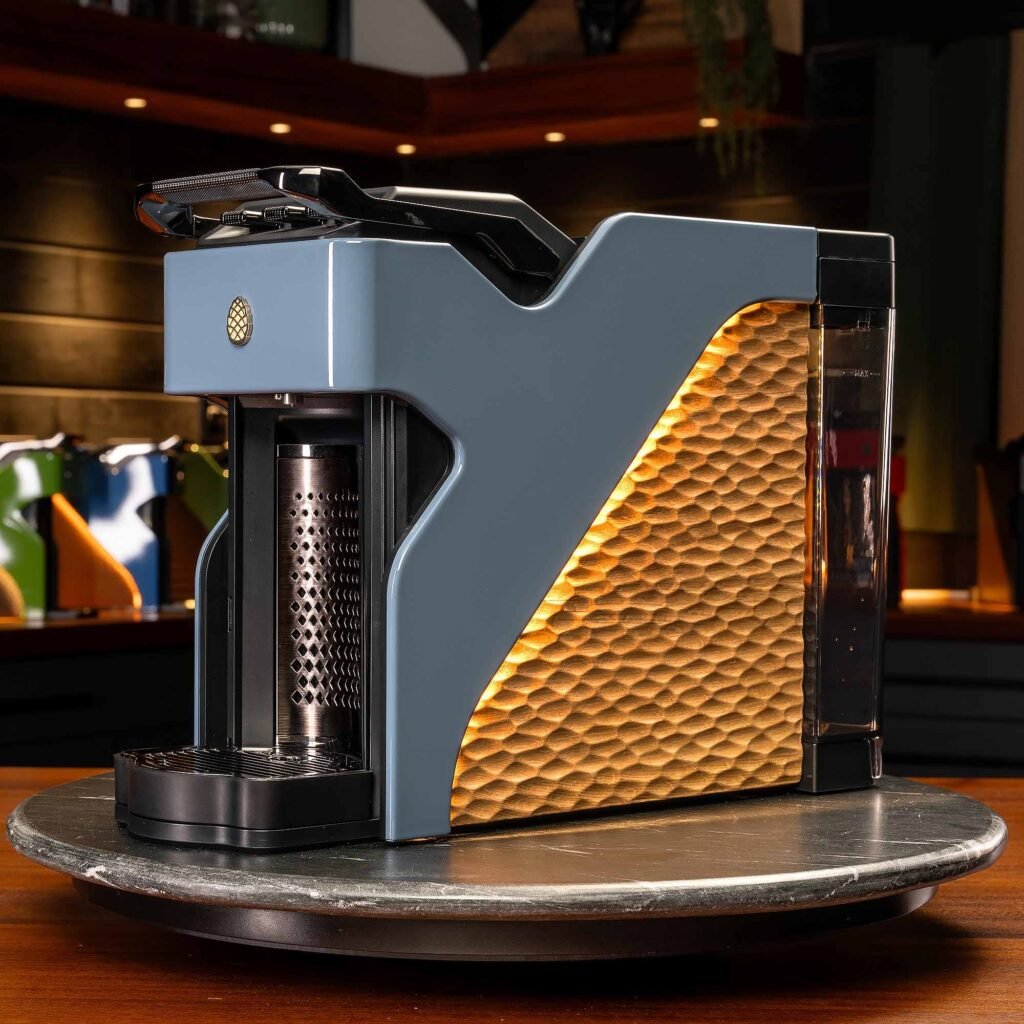
Milton’s Line1 is an espresso machine compatible with Nespresso OriginalLine capsules, a format many European households already use. The company’s main engineering change is inside. Most capsule machines use plastic components in the part of the machine where hot water and coffee meet. The Line1 uses a stainless steel brew system instead, which Milton describes as the first in a pod-based coffee machine.
The rest of the build follows the same logic. The controls are metal. The machine rinses itself after every brew. It carries a limited lifetime warranty. Custom versions are finished by hand in Georgia in materials such as wood, leather, hand-hammered metal and carbon fiber, so owners can choose a machine that suits the kitchen it will stay in.
Founder Matt Kossoff has been arguing for this shift since before launch.
“We believe the category is overdue for a shift away from disposable, plastic-heavy appliances toward more durable, design-forward products that people are proud to keep on their countertops,” Kossoff says.
The waste behind the rules
Regulation is one pressure. The volume of discarded electronics is another. According to the Global E-waste Monitor 2024, the world generated a record 62 billion kilograms of e-waste in 2022, and only 22.3 per cent was documented as formally collected and recycled. The report expects that gap to keep widening. Small appliances that are replaced every few years, sometimes while their core parts still work, add to that stream. ITUResearchGate
A coffee machine is a small item in that total. It is also one of the most-used appliances in a home, running every day for years if it’s built well. That makes durability easy for a buyer to judge over time.
Why Europe comes after Canada
Milton is growing in stages. The United States is its first market, and Canada is next. Select European markets follow, supported by relationships the company already has with specialty roasters and distribution partners established there.
Part of that supply chain already exists. Milton curates capsules from nearly 30 independent roasters worldwide, and its catalog includes roasters from Sweden and the United Kingdom. In its hospitality work, the company has also partnered with Wolstton Coffee, a Madrid roaster known for fully compostable capsules.
Capsules that fit European waste habits
Europe’s capsule market has been paying closer attention to waste for some time. Many of Milton’s roaster partners produce home-compostable capsules. Kossoff argues these are a more realistic option than aluminum capsules that depend on consumers returning them for recycling, which many people don’t do.
For Milton, compatibility with the OriginalLine format means European customers wouldn’t need to change their capsule habits to use a Line1. They could keep the capsules they already buy and try compostable options from the roasters Milton works with.
A market that already values longevity
Milton hasn’t announced dates or specific countries for its European launch. What it has described is the order: US, then Canada, then Europe. By the time it arrives, European buyers will already be living under rules that favor repairable, longer-lasting goods.
A company whose whole pitch is a machine you keep for years could find those buyers well prepared for it. The directive didn’t create the demand for durable appliances, but it has made the question of how long a product lasts part of the purchase for millions of European shoppers.