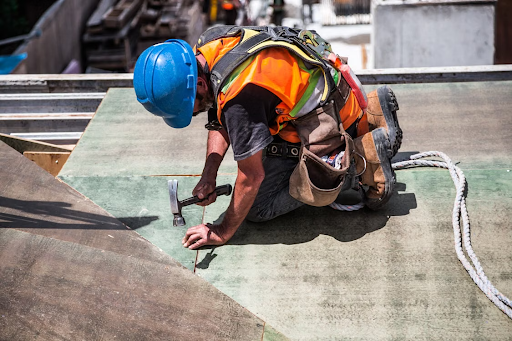
A commercial roofer may win the first project with a competitive bid. The second contract usually comes from something harder to package: proof that the contractor can protect the developer’s schedule, budget, tenants, and reputation.
That distinction matters on commercial work. A roofing delay can hold up mechanical installations, interior finishes, inspections, tenant turnover, or the opening of an entire property. One missed handoff can affect several trades. For builders, developers, and property managers, repeat business is therefore not a courtesy or a marketing claim. It is a judgment about whether a contractor reduced risk the first time.
Merrimack Valley Roofing & Gutter offers a regional example. Founded in 1976, the family-run roof repair company serves residential and commercial clients in Southern New Hampshire, northeastern Massachusetts, and southern Maine. Its commercial roof repair services include flat and low-slope roofing, repairs, replacements, drainage-related services, storm response, and snow and ice removal.
The Second Contract Is Earned on Site
A first contract may be awarded after a competitive estimate, a recommendation, or proof of licensing and insurance. However, the second one depends on what happened after mobilization. Did the crew arrive when promised? Were site conditions reported before they became expensive surprises? Did the company coordinate deliveries and access without disrupting the rest of the project?
Those questions matter most when choosing commercial roofing contractors in NH and MA. New England weather adds uncertainty to already tight construction schedules, while flat and low-slope systems require careful drainage and membrane work. Ponding water and poor drainage can shorten the service life of commercial membranes, making regional experience more than a matter of convenience.
A trusted roofing partner does not wait until a deadline is missed to disclose a material delay or hidden deck damage. The contractor reports the condition, shows its effect on cost and sequence, and gives the project team enough time to choose a response.
That standard becomes especially valuable for commercial roofing contractors in NH and MA, where complex weather can compress schedules and expose weak temporary protection. Flat and low-slope systems also depend on careful detailing around drains, penetrations, curbs, seams, and transitions.
Consistency also reduces management work. When the same reliable roof repair crew leads return, they already understand site access, reporting preferences, safety expectations, and the developer’s tolerance for disruption. Merrimack Valley Roofing & Gutter makes repeat work with the same crew leads central to its commercial model. For a project team, that continuity can mean fewer repeated instructions and faster decisions when field conditions change.
As a result, the licensed roofing company has been known to have past clients who repeatedly mention the company’s punctuality, efficiency, cleanup, fair pricing, and responsiveness. One Seacoast developer says he has used the company on more than 20 projects and hopes to continue the relationship; a builder reports using it on several high-end roof finishes and highlights on-time arrival and a willingness to return when needed.
For Merrimack Valley Roofing & Gutter owner Jeremy Coito, points to this operational side as part of what drives repeat business. Commercial clients mention punctuality, clean sites, responsive return visits, comparable pricing, and completed work without recurring problems. Together, these qualities reduce the supervision a builder must spend on one subcontractor—and that often earns the next contract.
Reliable Roof Repair in Action
Accountability after completion of roof repair is equally important. Commercial roofs become long-term assets that require inspections, maintenance, drainage checks, and timely repairs. A contractor seeking repeat work must remain available after the final invoice, particularly when a leak could affect inventory, tenants, equipment, or business continuity.
Beyond field leadership, schedule control, cost discipline, and closeout, commercial developers should also test their roof repair when the building is occupied, access is difficult, or several trades compete for roof space. Change orders should remain tied to documented conditions. Punch-list work should receive the same attention as installation. Warranty documents, photographs, inspection records, and maintenance guidance should arrive without repeated requests.
Past-performance systems use similar categories when assessing contractors: technical quality, cost control, schedule, management, and business relations. This is why repeat work is meaningful. It measures whether the contractor can deliver under a new set of constraints rather than merely reproduce the appearance of the previous roof.
What Loses the Third Project
A commercial roof repair project contains too many variables to expect a problem-free job every time. A contractor may preserve the relationship after a mistake by reporting it early, proposing a credible correction, and taking responsibility. Repeated failures handled poorly are far more damaging.
The third contract is often lost through patterns: late starts without notice, incomplete scopes that create avoidable extras, rotating supervisors, weak protection of occupied areas, poor cleanup, unanswered callbacks, or unfinished closeout files. A low bid also loses value when it moves costs into change orders or delays other trades. Contractor-selection research cautions against relying on price alone and weighs experience, prior performance, planning, quality, and completion history more heavily.
Post-project service belongs in this section because commercial roofs remain operating assets after the installation crew leaves. They require inspections, drainage checks, maintenance, and timely repair. A leak may threaten inventory, equipment, tenants, or business continuity, so an unanswered callback can erase much of the trust earned during construction.
Merrimack Valley Roofing & Gutter describes itself as a licensed roofing company that has operated regionally since 1976. Those facts may put it among the candidates for a commercial developer seeking a licensed roofing company in Southern New Hampshire, but they don’t replace a project-level review. The stronger case comes from references confirming that the company returns calls, corrects deficiencies, completes closeout, and applies consistent standards across commercial assignments.
The Real Meaning of Repeat Business
No commercial roofing project unfolds exactly as planned. Weather shifts, concealed damage emerges, and construction schedules change. What matters is how a trusted roof repair company responds.
In their over 50 years in the business, Merrimack Valley Roofing & Gutter points to practical reasons for repeat business: consistent supervision, prompt communication, orderly job sites, predictable costs, and reliable follow-through across multiple projects.
Every completed project adds another layer of proof. The first contract tests whether a roofer has the technical skill to complete the work. The second shows whether that performance can be repeated when deadlines tighten, or unexpected conditions arise. By the third, the relationship no longer depends on sales claims; it rests on a visible record of results.
That record is why developers return to the same commercial roofer. Familiarity may save time, but performance earns the next call. A contractor must continue protecting the builder’s schedule, budget, property, and reputation on every project. In commercial roofing, trust is never secured once; it is renewed one project after another.