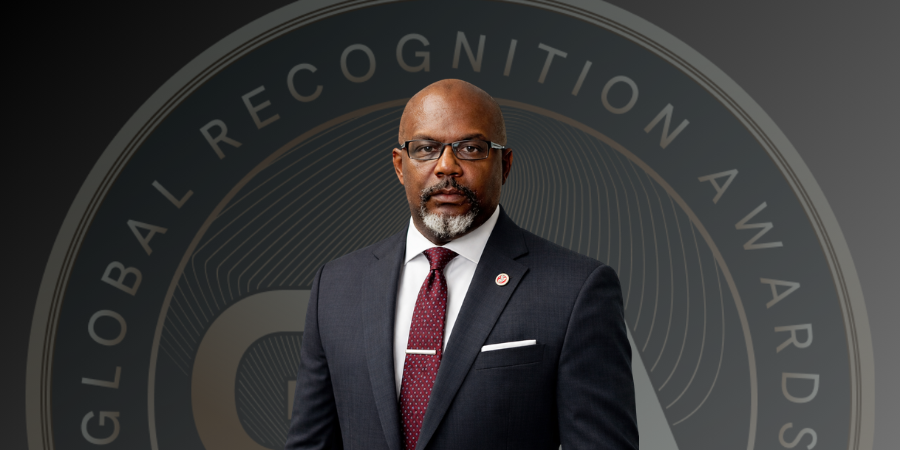
Most attorneys choose a lane and stay in it. Zulu Ali chose three and built a practice around the idea that, for many clients, those lanes were never meant to be separated in the first place.
Ali, a former United States Marine and police officer turned criminal defense and immigration attorney, has spent decades operating at the intersection of two legal disciplines that most practitioners treat as entirely distinct: criminal law and immigration law. His premise is straightforward. For non-citizens, a criminal conviction is rarely just a criminal matter. It can trigger deportation, bar a path to citizenship, or permanently alter a family’s trajectory.
Treating those consequences as someone else’s problem, the immigration attorney’s, to be handled later, has long been the default. Ali’s firm, Zulu Ali and Associates, LLP, was built on the argument that the default was wrong. This year, he received a 2026 Global Recognition Award for that work.
The Gap He Decided to Fill
Before law school, Ali served in the Marine Corps and spent more than a decade as a police officer. That sequence is unusual for a defense attorney, and it has proven strategically significant. He understands, from experience, how arrests are made, how charges are constructed, and how prosecutorial decisions are framed. That knowledge informs how he reads a case and how he advises clients navigating both a criminal charge and an immigration consequence.
The legal framework Ali developed is what scholars and journalists have come to describe as “crimmigration” defense, an integrated model in which criminal case strategy is assessed alongside its direct immigration implications from the outset, not as an afterthought. His firm has been featured in Forbes Scotland, the Daily Journal, and Essence Magazine, each noting the approach as a model for more complete legal representation. The firm has since grown to become the largest Black-owned law firm in California’s Inland Empire.
That growth reflects something practical: there was demand for what Ali was offering, and not enough supply. The communities he serves, many of them non-citizens and many of them without ready access to legal resources, needed attorneys who could see the full picture of their legal exposure. Building a firm around that need was not a philanthropic gesture. It was a recognition that an underserved client base and an underutilized legal framework could come together into something durable.
What the Credentials Actually Represent
Ali is admitted to practice before the International Criminal Court at The Hague and the African Court of Justice, distinctions that are uncommon among American attorneys. His firm’s reach into international human rights law is not merely credential-gathering. It is reflected in outcomes. His advocacy produced a published victory in the United States Court of Appeals for the District of Columbia Circuit that established a new legal standard for claims under the United Nations Convention Against Torture, a precedent with implications that extend well beyond his clients.
Ali and his daughter, Attorney Whitney Ali, were named among the Most Influential People of African Descent in Law and Justice, an initiative supported by the United Nations. His firm has also received recognition from The National Trial Lawyers Top 100 and the American Institute of Trial Lawyers. These assessments, grounded in documented trial performance rather than reputation alone, collectively form a record that spans disciplines, jurisdictions, and continents.
The 2026 Global Recognition Award was evaluated using the Rasch model, a measurement framework that produces a linear scale, allowing comparisons across applicants who excel in different categories. A panel of independent industry experts assessed Ali’s portfolio across Innovation, Leadership, and Service, assigning a score of 5, the program’s highest designation. Award spokesperson Alex Sterling noted, “Zulu Ali exemplifies exactly the kind of world-class achievement this award exists to honor: a legal career defined by innovation, principled leadership, and a genuine commitment to communities that need it most.”
The Work That Doesn’t Bill by the Hour
Ali founded the Linda Reese Harvey Stop and Frisk Leadership Academy, which educates young people on their constitutional rights and on how to navigate interactions with law enforcement. He also operates the Southern California Veterans Legal Clinic, providing low-cost and pro bono legal services to veterans and active-duty military personnel. Neither program generates revenue in any meaningful commercial sense. Both reflect a deliberate extension of professional values into community life.
That distinction matters because it speaks to how Ali has structured his priorities throughout his career. The pro bono work, the community programs, and the international credentials do not fit neatly into a conventional law firm growth model. They suggest instead a practice organized around a set of commitments that predate any business strategy: that people facing the most complex legal circumstances deserve counsel capable of meeting that complexity, regardless of what they can pay.
What Ali has built over decades, a cross-disciplinary firm, a body of precedent-setting work, and a set of community programs grounded in the same principles that drive his courtroom practice, is less a brand than a coherent argument about what legal representation can look like when it takes the full scope of a client’s circumstances seriously. That argument has proven persuasive far beyond the Inland Empire.