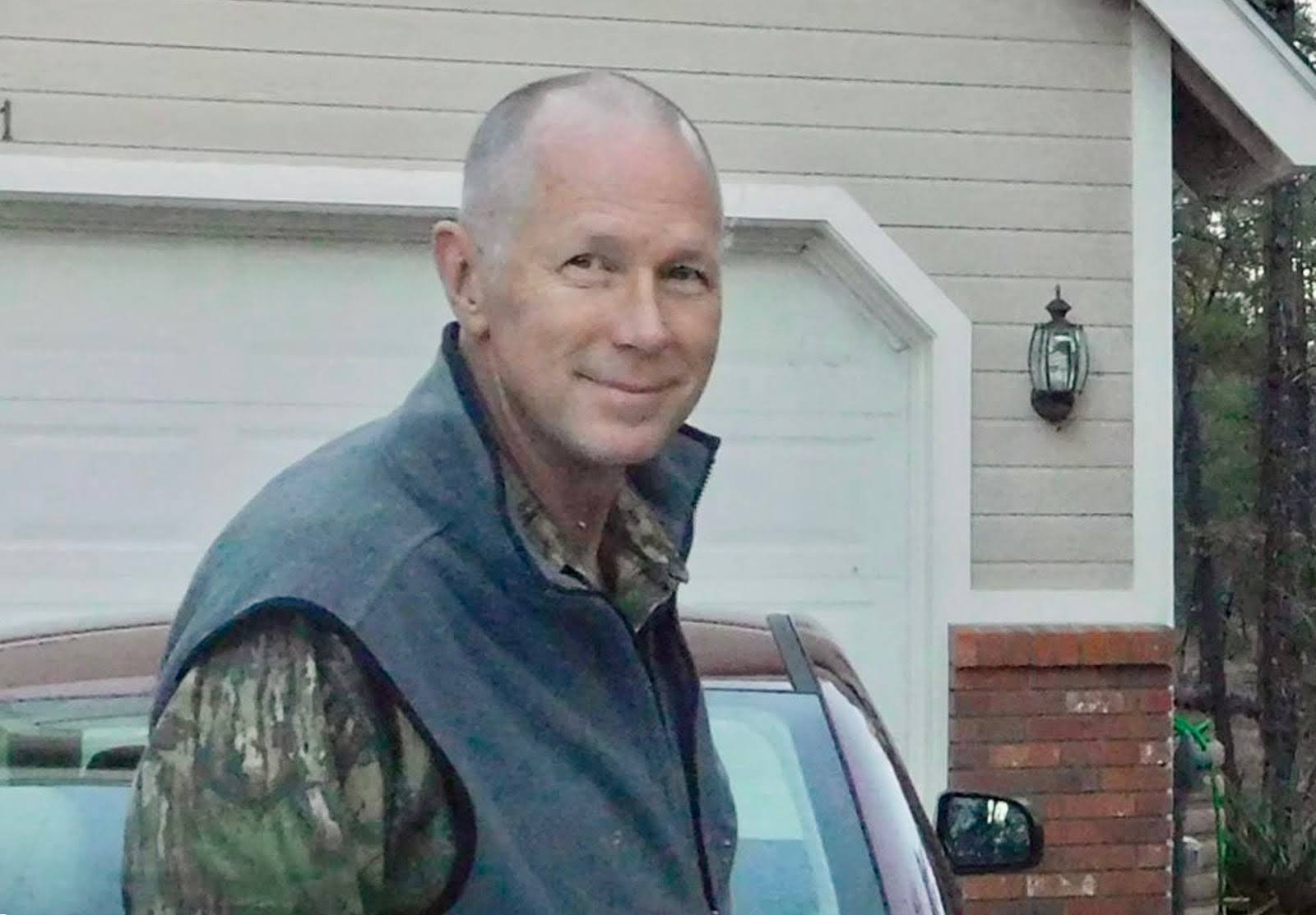
Erna was in her eighties when someone first told her she could heal.
She had carried the weight of childhood abuse since post-World War II America, where her German heritage made her a target. Children pretended to befriend her, gave her pets as gifts, then killed them in horrific ways, leaving the remains for her to find. Treated similarly by adults, her father was harsh and emotionally distant. Her mother offered little comfort. She developed two selves: one, muted with sadness at home; another, curious and open in public.
The moment she walked up the steps to her front door, the darkness crept back in. Now living with her daughter and son-in-law, Erna remained timid and plagued by doubt. Ordering lunch terrified her. She questioned her worthiness before God, even as she held firm to her faith. She had married at fifteen under parental pressure, forfeiting college. Her husband had been unfaithful, yet she blamed herself. Despite decades of belief, she did not feel forgiven.
Then she met Tracy Cassity, LCSW.
The Therapist Who Walked Away From the Playbook
Tracy Cassity is the kind of mental health professional the establishment would rather ignore. A licensed clinical social worker with over a decade of experience in acute psychiatric care across Southern California, including pastoral care work at his alma mater’s Neuropsychiatric Institute, he abandoned every standard treatment protocol in favor of a single method: Trauma Conversion Therapy (TCT).
TCT, owned and developed by Patrick Poor, uses the most misunderstood diagnostic theory and operates on a premise that mainstream mental health has rejected for a century: that most psychological pain is spiritual injury as much as or more than physical. Where conventional therapy teaches clients to manage symptoms indefinitely through medication or years of talk-based sessions, TCT targets the root of the pain and seeks full remission.
Cassity’s book, Extraordinary Mental Wellness: A Proven Pathway Out of Darkness and Despair, documents 750 client remission outcomes and studies 300 across three years. The numbers stagger: 96.42 percent of clients reached complete remission in 2020, 97.36 percent in 2021, and 98.6 percent in 2022, all in fewer sessions than any comparable treatment. Up to 86% were discharged after 6 or fewer sessions. Twenty percent healed in one session.
These outcomes span bipolar disorder, PTSD, OCD, anxiety, depression, anorexia, and beyond. They have been validated against over 500 case studies with zero recidivism across three years, a claim no other body of mental health research can match. Cassity remained open and operating at 150 percent of its prior caseload throughout the Covid-19 pandemic, treating to lasting remission while the rest of the field shut its doors. “Best practices are neither truth, science, nor the best we can do,” he writes. “These are stories of people who told me, not the other way around, that they were healed.”
What Happened to Erna
Erna approached Cassity one Sunday after church, hesitant, as if unsure whether she was allowed to speak. What she disclosed had been locked inside her for decades, pain so deep it had calcified into identity. The timing was impossible. Cassity was leaving his position that Wednesday. Three days. He had every reason to say no, to refer her elsewhere, to follow the protocol that the system rewards. He chose differently.
On Monday, he taught Erna the TCT skills. On Wednesday, he saw her one final time and closed her case. Two sessions. Her initial Outcome Questionnaire score registered 80, deep in the high-distress range. At her second session, it plummeted to 29, a 51-point reduction representing 3.6 standard deviations beyond the benchmark that the mental health field considers its gold standard. The official feedback: “The patient is functioning in the normal range. Consider termination.”
At her first session, Erna had listed twelve areas of emotional distress. At her second, she listed none. She reported sleeping peacefully. She felt calm. She no longer questioned her value in God’s eyes. Erna wrote Cassity a note by hand and granted permission to share it: “I had no concept of how life could be so different. I’m able to talk to people without being afraid. I wake up now, happy to face the day rather than dread it. There’s an inner peace and strength that my Father in Heaven has given me.”
Why the System Cannot Accept This
The mental health establishment operates on a trillion-dollar premise: that conditions are lifelong, recovery is partial, and treatment must be ongoing. Remission, true, lasting, and complete, threatens that architecture at every level, from billing codes to academic reputations to pharmaceutical partnerships.
Cassity describes a field that punishes success. When one of his clients fully corrected bipolar disorder to zero symptoms, the reaction was not celebration but suspicion. Leadership told him the client must never have had the condition. When remission outcomes arrived too quickly, supervisors called the speed unsafe, without producing evidence that slower timelines yielded superior results.
“A wounded spirit must be healed spiritually, not numbed, debated, or demeaned,” Cassity writes. That sentence captures the philosophical chasm between TCT and the profession it challenges. Standard practice treats the body and ignores what Cassity considers the stronger half of the human person. TCT treats both, and the results speak louder than credentials ever could.
Erna’s case is one of hundreds. She arrived shattered by a lifetime of abuse, prejudice, and institutional neglect. She departed two sessions later with a peace she had never known. The healing was not miraculous because it happened fast. It was miraculous because it was hers.