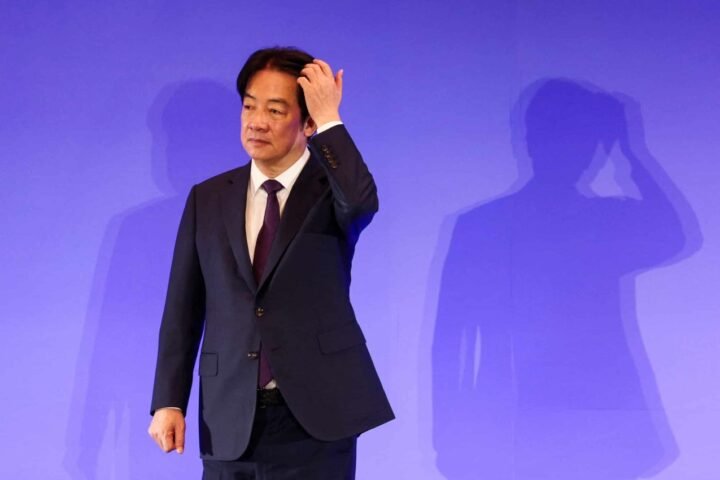
MANILA — President Ferdinand Marcos Jr.’s approval and trust ratings have declined further in the latest Pulse Asia survey, even as Vice President Sara Duterte continues to enjoy majority public support despite an ongoing impeachment trial.
The July 2026 Ulat ng Bayan survey, released Monday, found that half of Filipinos now disapprove of Marcos’ performance, while only 29 percent approve and 21 percent remain undecided. Compared with Pulse Asia’s March survey, the President’s approval rating dropped by 7 percentage points, while disapproval climbed to 50 percent.
Marcos’ trust rating also fell, slipping to 28 percent from 35 percent in March. Meanwhile, 51 percent of respondents said they distrusted the President, the highest distrust figure he has recorded in the firm’s quarterly surveys this year.
Duterte’s standing, by contrast, has remained largely stable despite months of political uncertainty tied to her impeachment case. Pulse Asia found that 56 percent of respondents approved of her performance, while 58 percent said they trusted her. Her disapproval and distrust ratings stood at 29 percent and 27 percent respectively, figures the polling firm described as essentially unchanged from March.
The nationwide survey was conducted via face-to-face interviews from June 28 to July 3 and July 6. Pulse Asia pointed to several events that may have shaped public sentiment during the survey period, including preparations for Duterte’s impeachment trial, a change in Senate leadership, the arrests of Senators Rodante Marcoleta and Jinggoy Estrada in separate corruption cases, ongoing investigations into the multibillion-peso flood control scandal, the government’s downward revision of its economic growth target, the World Bank’s upgrade of the Philippines to upper-middle-income status, and the P85 wage increase for Metro Manila workers. The period also coincided with rising oil prices amid renewed tensions in the Middle East, as well as the aftermath of the magnitude 7.8 earthquake that struck Mindanao in June.
Regional divide persists
The survey also revealed a sharp regional split in public opinion. Marcos failed to secure majority approval in any major geographic area, with his approval rating highest in the rest of Luzon at 40 percent, dropping to 24 percent in the Visayas and just 6 percent in Mindanao. Disapproval of the President reached 79 percent in Mindanao and 53 percent in the Visayas, compared with 43 percent in Metro Manila.
Duterte, meanwhile, continued to dominate in regions considered her political stronghold, posting 61 percent approval in the Visayas and 89 percent in Mindanao, with trust ratings reaching 65 percent and 95 percent respectively in those regions. In Metro Manila and the rest of Luzon, however, opinion on the vice president was nearly evenly split. Pulse Asia noted that while Duterte’s national ratings held steady between March and July, Marcos saw a 7-point decline in both approval and trust, alongside corresponding increases in disapproval and distrust.
Inflation remains top public concern
Economic issues continued to dominate public concerns in the latest survey, with nearly six in 10 Filipinos (57 percent) saying that controlling inflation should be the administration’s most urgent priority. Inflation has consistently topped Pulse Asia’s surveys in recent quarters, reflecting the continued strain of rising food and household costs despite an easing in headline inflation figures.
Fighting corruption in government followed as the second most urgent concern (43 percent), ahead of increasing workers’ pay (36 percent), reducing poverty (26 percent), and fighting criminality (22 percent). Other concerns cited included illegal drugs (19 percent), job creation (15 percent), lowering fuel prices amid the Middle East conflict (13 percent), promoting peace (11 percent), addressing involuntary hunger (11 percent), and enforcing the rule of law (11 percent).
Pulse Asia also noted some shifts in priorities since March, with concern over poverty and criminality each rising by 5 percentage points, while concern over job creation fell by six points and concern over assistance to farmers dropped by five points. Metro Manila stood out as the only region where corruption (56 percent) narrowly edged out inflation (55 percent) as the top concern; in the rest of Luzon, the Visayas, and Mindanao, inflation remained the dominant issue.
Weak performance ratings across the board
The survey found that the Marcos administration failed to secure majority approval on any of the 19 national issues respondents were asked to evaluate. Its weakest rating came on controlling inflation, with 77 percent expressing disapproval. Large majorities also disapproved of the administration’s performance on fighting illegal drugs (70 percent), combating corruption (68 percent), reducing poverty (61 percent), lowering fuel prices (59 percent), and fighting criminality (56 percent). More respondents disapproved than approved of the government’s handling of workers’ wages, peace and order, and job generation.
The administration’s highest ratings came on protecting the welfare of overseas Filipino workers (46 percent) and responding to calamity-hit areas (42 percent), though neither issue reached majority approval. Public opinion was nearly evenly split on the government’s efforts to defend Philippine territory, with 34 percent approving and an equal share disapproving.
Pulse Asia interviewed 2,400 adults nationwide through face-to-face interviews. The survey carries a margin of error of ±2 percentage points at the 95 percent confidence level nationally, while results for Metro Manila, the rest of Luzon, the Visayas, and Mindanao each carry a margin of error of ±4 percentage points.