The best year in the history of Australian electric vehicle sales ended with a receiver holding the keys to 197 of them.
That sentence should not be possible. Australians bought more than 157,000 EVs in 2025, a 38 percent annual jump that pushed electric cars to 13.1 percent of all new-vehicle sales, according to the Electric Vehicle Council. Every structural tailwind a car company could ask for was blowing. And yet on March 19, 2026, receivers from insolvency firm Cor Cordis took control of the vehicle stock of True EV Distribution Pty Ltd, the exclusive Australian importer of Chinese EV brand XPENG, because a secured lender had stopped being paid.
The instinct is to look for a villain. The more useful move is to look at the machine. TrueEV’s collapse is a lesson in how the local-distributor model that Chinese EV brands used to enter Western markets actually works, where its cash flows hide, and why the model can fail its operator even when the product is selling. The uncomfortable mechanic underneath it: in stock-financed car distribution, demand and solvency are two different systems, and only one of them was booming.
The business model was borrowed cars all the way down
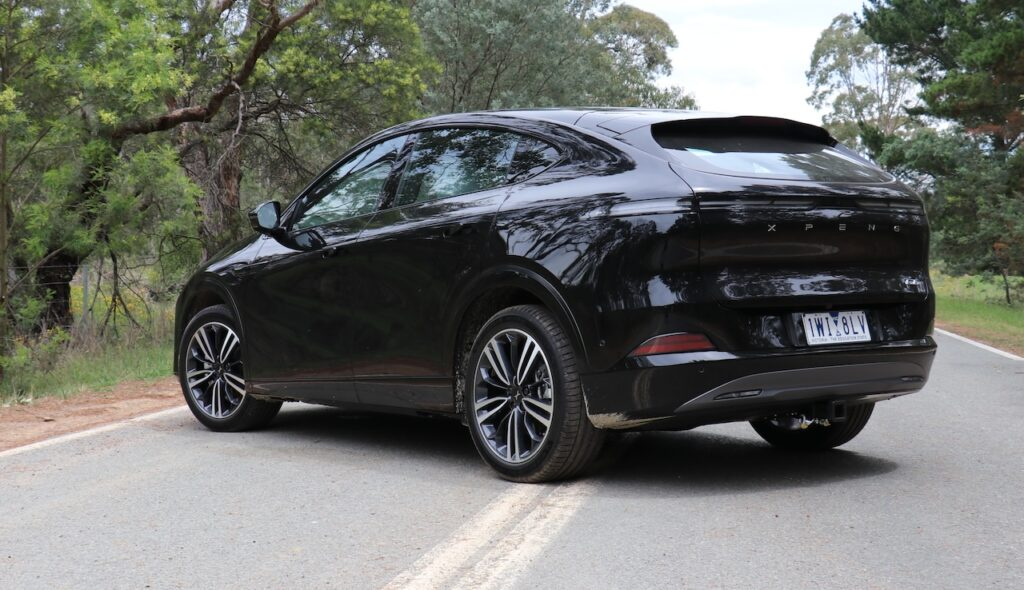
Here is the machine TrueEV was running. The company became XPENG’s exclusive Australian importer and distributor in May 2024, started deliveries that August, and scaled fast: a network reported at around 15 dealers and close to 60 service centers, and, by the company’s own December 2025 count, more than 2,000 cars on Australian roads inside 18 months.
Almost none of that inventory sits on a distributor’s own balance sheet in a model like this. TrueEV took trade finance from a lender called Helios, meaning the cars were bought with borrowed money and the lender held security over them. This is standard practice, and it is also the model’s hidden fragility. The distributor’s margin lies in the gap between the finance cost of holding a car and the time it takes to sell it. Anything that disrupts the selling side, a supply change, a pricing change, a fight with the manufacturer, doesn’t shave the business. It breaks it, because the secured debt keeps falling due on schedule while the revenue doesn’t.
The disruption arrived on January 1, 2026, when XPENG issued a notice ending TrueEV’s exclusivity. The unwinding took less than a quarter. TrueEV sued three arms of XPENG in Australia’s Federal Court on March 3, alleging unconscionable conduct and breaches of the Competition and Consumer Act and the Franchising Code. Sixteen days later, Helios appointed receivers over the 197 vehicles it had financed. Australia’s corporate regulator, ASIC, now lists the company as externally administered under receivership. Not liquidation, not voluntary administration. A lender enforcing its security, which is what happens when the payments stop.
A judge, not a creditor, delivered the diagnosis
Australian law tests solvency with one question: can the company pay its debts as and when they fall due? On March 30, Justice Jackman of the Federal Court answered it in unusually plain language while refusing TrueEV an injunction against XPENG. The evidence, he said,
“strongly suggests an inability on True EV’s part to comply with the payment term in the Distributor Agreement, rather than merely an unwillingness to do so.”
Inability, not unwillingness. That distinction is the whole case. He added that the company
“does not appear to have the wherewithal to honour its undertaking as to damages”.
A month later, the court ordered TrueEV to pay $1,256,860 into court as security for XPENG’s legal costs, the first $628,430 due by May 31, noting XPENG’s submission that the company was now in receivership, apparently due to its lack of financial resources.
The creditor ledger tells the same story at every altitude. At the top, a secured financier owed enough to send in receivers. In the middle, retail customers: XPENG G6 buyers from December 2025 said promised cashback rebates went unpaid for months. At the bottom, a $38,500 invoice. The PR Hub, a publicity agency, had been chasing that sum, including GST, since October 2025 and sent a final letter of demand on March 2, seventeen days before the receivers walked in. When a company misses its lender, its customers, and a five-figure trade invoice in the same window, the solvency question has stopped being theoretical.
TrueEV is one data point in a broader squeeze. ASIC recorded 13,413 Australian companies entering external administration in the financial year to May 31, 2025, up 34.2 percent on the prior corresponding period. And for anyone in TrueEV’s unsecured queue, the base rates are brutal: the Reserve Bank of Australia’s April 2025 Financial Stability Review found more than 80 percent of insolvencies deliver an estimated zero cents in the dollar to unsecured creditors.
The model failed before the company did
Now the counterargument, and it’s a real one. TrueEV says the machine didn’t break on its own. XPENG broke it. In a May 6 letter to customers, chief executive Jason Clarke apologized for the company’s silence, attributed 16 months of disruption to changes XPENG made, and committed that warranties would be honored and the cashback backlog cleared. TrueEV is the plaintiff here, not the defendant, and if it wins the October trial it could be owed a great deal. No court has decided why the money ran out. What the record already establishes is that it did.
The structural evidence sits one brand over. BYD, the biggest Chinese EV maker of all, entered Australia through a local distributor too, EVDirect, then took distribution in-house from July 2025 after more than 50,000 deliveries. EVDirect negotiated a landing, converting into a retail joint venture with dealer giant Eagers Automotive. TrueEV got no such glide path. Two launch distributors, two manufacturers reclaiming the channel within a year of each other, one soft landing and one receivership. The pattern suggests the local-distributor era for Chinese EV brands in Australia was always a bridge, and bridges get dismantled once the traffic proves the route.
That is the takeaway for anyone building a business on someone else’s product and money at the same time. TrueEV’s dealers were real, its service centers were real, its 2,000 customers were real. The one thing it never owned was the two levers that determine whether a distributor lives: the product’s supply and the terms of the debt. The manufacturer held one. The financier held the other. When both moved in the same quarter, no sales boom on earth was going to cover the gap.
The market grew 38 percent. The company still couldn’t pay its bills. In this business model, those two facts were never in conflict.