For years, homesteading online carried a certain image: isolated cabins, expensive land and highly curated rural lifestyles that often felt financially out of reach for ordinary viewers.
Matthew Gauger is trying to push against that perception.
The creator behind Greenhorn Grove has built a following of more than 1.6 million people by focusing less on fantasy and more on entry-level practicality. His videos frequently cover inexpensive projects, beginner gardening mistakes and ways to grow food in limited spaces.
The tone is notably different from survivalist or prepper content that often dominates discussions about self-sufficiency online. Gauger rarely frames gardening through fear. Instead, he presents it as a stabilizing skill during periods of economic uncertainty and social stress.
“We’re trying to help people feel a little less helpless,” Gauger said.
That message has gained traction during a period of growing concern about food costs and supply chain disruptions. Inflation pushed grocery prices sharply higher in recent years, while extreme weather events affected agricultural production across multiple regions of the United States.
Research groups tracking consumer behavior have also documented rising interest in gardening among younger Americans. Industry reports show that millennials and Gen Z consumers increasingly view gardening as both a financial tool and a mental health activity.
Gauger’s own audience reflects that shift. His followers include suburban families, apartment dwellers and people with little prior agricultural experience. Many arrive through short-form videos on TikTok or Instagram before moving into longer educational content.
That educational side now includes The Greenhorn Guides, a free online resource library developed alongside a network of other homestead creators. The platform combines written e-books with instructional YouTube videos covering gardening, preserving food, small livestock systems and household resilience skills.
The project operates under a simple premise: self-sufficiency knowledge should not require expensive subscriptions.
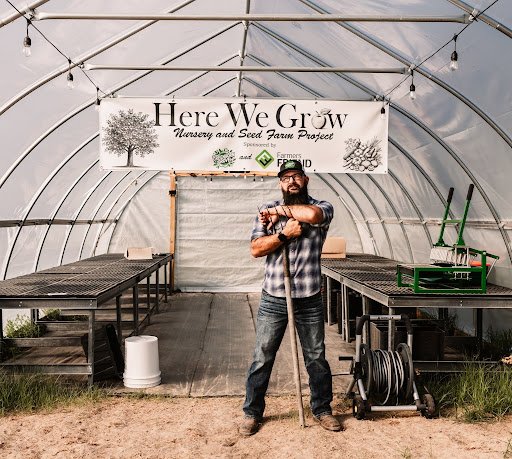
The next phase of Gauger’s work focuses on physical infrastructure. Through his nonprofit, Here We Grow, he plans to distribute free seed kits and help establish community gardens in partnership with schools, churches and local organizations.
The nonprofit also expanded its role after Hurricane Helene caused severe damage in western North Carolina. Gauger says the experience reinforced his belief that local food systems and community networks matter most when larger systems become strained.
His plans for future “community homesteads” involve larger shared spaces designed to provide both food production and educational opportunities.
The idea remains ambitious, particularly for a relatively new organization still heavily tied to Gauger’s personal audience. Experts who study creator-led nonprofits often note the challenge of sustaining operational work once online momentum slows.
Still, Gauger’s rise reflects a broader cultural shift. Audiences increasingly appear drawn to creators who provide practical information rather than aspirational luxury. Gardening videos now routinely generate millions of views across platforms once dominated by entertainment trends.
For Gauger, the goal is not escaping modern life entirely. Most of his followers still live in cities or suburbs. Instead, he frames self-sufficiency as a way to regain a small measure of control in uncertain times.
“The point isn’t perfection,” he said. “The point is learning how to do more for yourself than you did yesterday.”